
By Eliza Shapiro from NYT New York https://nyti.ms/3e9Ht1m


(JERUSALEM) — A stampede broke out early Friday at a Jewish religious gathering attended by tens of thousands of people in northern Israel, injuring more than 100 people, dozens critically, Israel’s main rescue service said. Israeli media reported dozens of deaths.
The disaster occurred at the main celebrations of Lag BaOmer, a holiday when tens of thousands of people, mostly ultra-Orthodox Jews, gather to honor Rabbi Shimon Bar Yochai, a 2nd century sage and mystic who is buried there. Large crowds traditionally light bonfires as part of the celebrations at Mount Meron.
Prime Minister Benjamin Netanyahu called it a “great tragedy,” and said everyone was praying for the victims.
The incident happened after midnight, and the cause of the stampede was not immediately clear. Videos circulating on social media showed large numbers of ultra-Orthodox Jews packed together in tight spaces.
A 24-year-old witness, identified only by his first name Dvir, told the Army Radio station that “masses of people were pushed into the same corner and a vortex was created.” He said a first row of people fell down, and then a second row, where he was standing, also began to fall down from the pressure of the stampede.
“I felt like I was about to die,” he said.
The Magen David Adom rescue service tweeted that it was treating 103 people, including 38 in critical condition. Israeli media had earlier reported that a grandstand collapsed, but the rescue service said all the injuries happened in a stampede.
Israeli media, citing anonymous medical officials reported up to 40 people were killed, but the rescue service did not immediately respond to a request for confirmation. Photos from the scene showed rows of wrapped bodies.
The Israeli military said it had dispatched medics and search and rescue teams along with helicopters to assist with a “mass casualty incident” in the area. It did not provide details on the nature of the disaster.
It was the first huge religious gathering to be held legally since Israel lifted nearly all restrictions related to the coronavirus pandemic. The country has seen cases plummet since launching one of the world’s most successful vaccination campaigns late last year.
Health authorities had nevertheless warned against holding such a large gathering.
But when the celebrations started, the Public Security Minister Amir Ohana, police chief Yaakov Shabtai and other top officials visited the event and met with police, who had deployed 5,000 extra forces to maintain order.
Ohana, a close ally of Netanyahu, thanked police for their hard work and dedication “for protecting the well-being and security for the many participants” as he wished the country a happy holiday.
Netanyahu is struggling to form a governing coalition ahead of a Tuesday deadline, and the national tragedy is sure to complicate those efforts.


It was a speech heavy on domestic policy, detailing ambitious plans to revamp American infrastructure, education, jobs and healthcare. But at the heart of U.S. President Joe Biden’s first address to Congress late Wednesday lay a theme common with his mercurial predecessor: competition with China to “win the 21st century.”
In a departure from prepared remarks on the eve of his first 100 days in office, Biden felt it necessary to spell out that Chinese President Xi Jinping “is deadly earnest on [China] becoming the most significant, consequential nation in the world. He and others, autocrats, think that democracy can’t compete in the 21st century.”
Referencing a two-hour telephone conversation he had with China’s strongman on the eve of the Lunar New Year holiday in February, Biden said, “I told him that we welcome the competition — and that we are not looking for conflict. But I made absolutely clear that I will defend American interests across the board.”
Biden’s tone was far less acrimonious than that of Donald Trump — who went conspicuously unmentioned throughout the 65-minute address to a half-empty Capitol — but left onlookers in no doubt that checking Beijing’s rise will dominate U.S. foreign policy under the new administration.
Read more: How Joe Biden Can Start Fixing Relations With China
“Decades ago, we used to invest 2% of our GDP on research and development,” said Biden. “Today, we spend less than 1%. China and other countries are closing in fast.”
In a departure from the “whole of society” competition that characterized bilateral relations under Trump, the president said that he would seek ways to work with China where interests aligned. In an easing of COVID-19 restrictions Monday, U.S. officials announced that Chinese students due to attend American universities after July 31 were free to enter the country.
Yet there was no mention of an end to the trade war that has so far cost tens of billions of dollars and up to 245,000 American jobs, according to one study. Far from scrapping the tariffs, Biden championed his own nativist economic policy: “American tax dollars are going to be used to buy American products made in America that create American jobs.”
“There’s no reason the blades for wind turbines can’t be built in Pittsburgh instead of Beijing,” he added. “No reason why American workers can’t lead the world in the production of electric vehicles and batteries.”
When it comes to human rights and democratic principles, Biden also insisted that he would hold China to account. Last month, Secretary of State Antony Blinken labeled Beijing’s treatment of its Uighur Muslim minority “genocide,” as the previous administration did.
“I told [Xi] what I’ve said to many world leaders — that America won’t back away from our commitment to human rights and fundamental freedoms,” said Biden. “No responsible American president can remain silent when basic human rights are violated. A president has to represent the essence of our country.”

Biden received a mixed reception in the world’s most populous nation, where some saw his preoccupation with the country as an attempt to intimidate. “Chinese leaders have never talked about China-U.S. competition,” tweeted Hu Xijin, the strident editor of Communist Party (CCP) mouthpiece Global Times. “It is you and your team who are talking about China every day. It seems that you have no idea what you should do if [you] don’t compare [yourself] with China. Pity.”
Wrote one cynical user on Weibo, the giant Chinese messaging platform, “On the 100th day of Biden’s arrival in the White House, my nostalgia for Trump is overwhelming.”
Said another: “Biden is tougher and more insidious with China than Trump. Trump is all explicit, Biden is more conspiratorial.”
But Trump’s full-throated attacks — especially his referring to COVID-19 as the “China Virus” and “Kung Flu” — made him deeply unpopular in China and contributed to the unleashing of Beijing’s belligerent “wolf warrior” diplomacy in response.
“You can’t just allow this kind of hostility or racism, to push China against the wall, so that people believe that the Chinese government is cornered without any way to hit back,” Victor Gao, director of the China National Association of International Studies, tells TIME. “Whatever differences there are between China and the United States, we need to have leadership and statesmanship with mature views of both sides to engage with each other.”
Read more: Action on Climate Change Won’t Improve U.S.-China Relations
Trump’s animosity also enabled the CCP leadership to forge stronger cohesion within Chinese society, casting America as the common enemy. On a visit to Guanxi province last week, Xi visited the site of a key battle during the fabled “Long March” of China’s Civil War and said the fight should provide inspiration for overcoming current tribulations. “No matter how big our difficulties, we should think of the Red Army’s Long March and the bloody Xiang River Battle,” he said.
Many in China hope that Biden’s more statesmanlike approach will lower the geopolitical temperature. On Friday, Foreign Minister Wang Yi delivered a speech to the U.S. Council on Foreign Relations in which he said China would “welcome the Biden administration to return to multilateralism” and called on the White House to treat his nation fairly.
“The key is whether the United States can accept the peaceful rise of a major country with a different social system, history, and culture,” said Wang. “It is undemocratic … to label China as ‘authoritarian’ or a ‘dictatorship’ simply because China’s democracy takes a different form than that of the United States.”
But on this point, as with many, it was clear Wednesday that the two sides remain at odds. Biden declared that he wanted to be “leading with our allies” to preserve the liberal democratic order. “We will maintain a strong military presence in the Indo-Pacific just as we do with NATO in Europe — not to start conflict, but to prevent conflict,” he said.
The president added: “The autocrats will not win the future.”


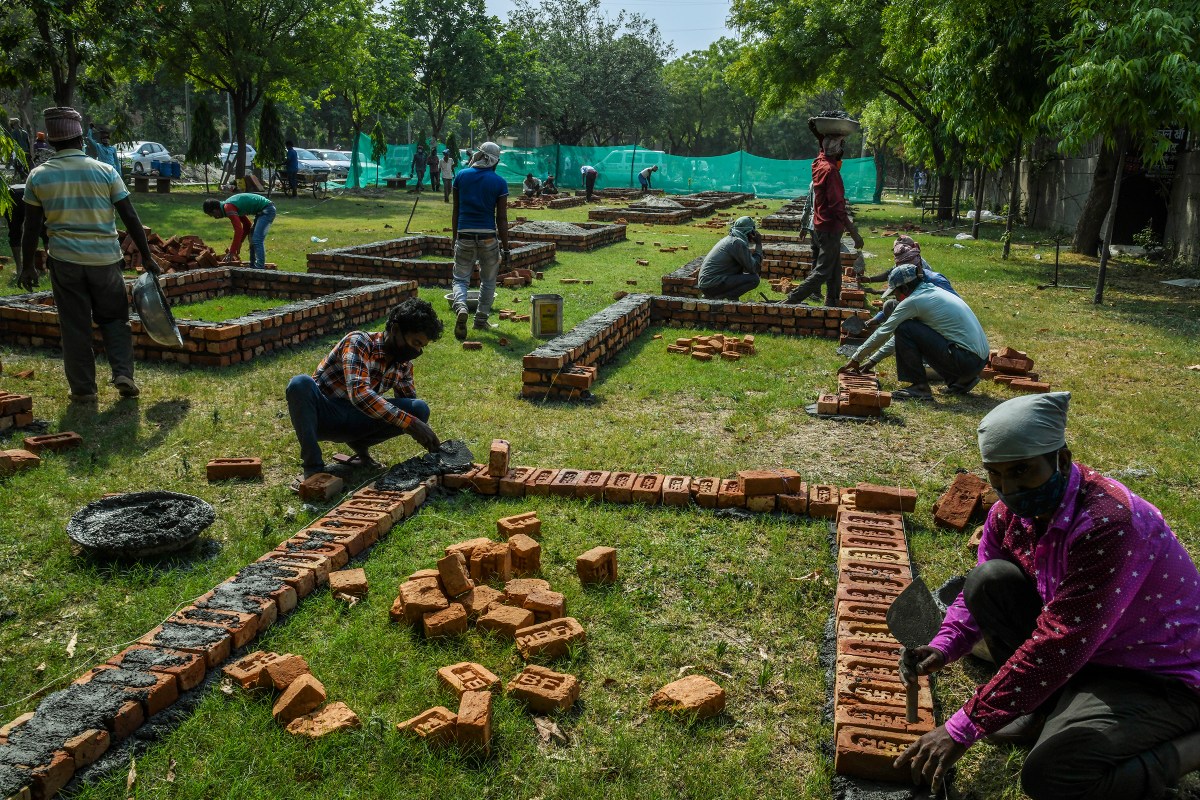
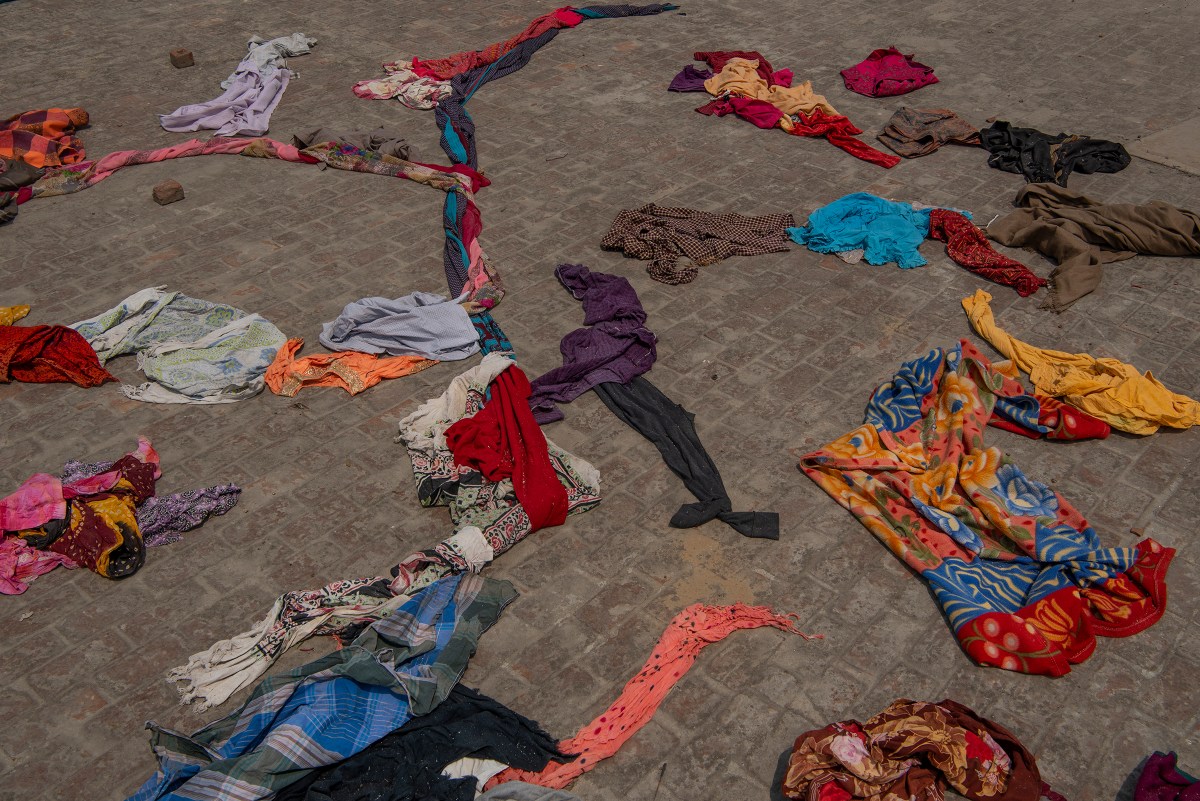
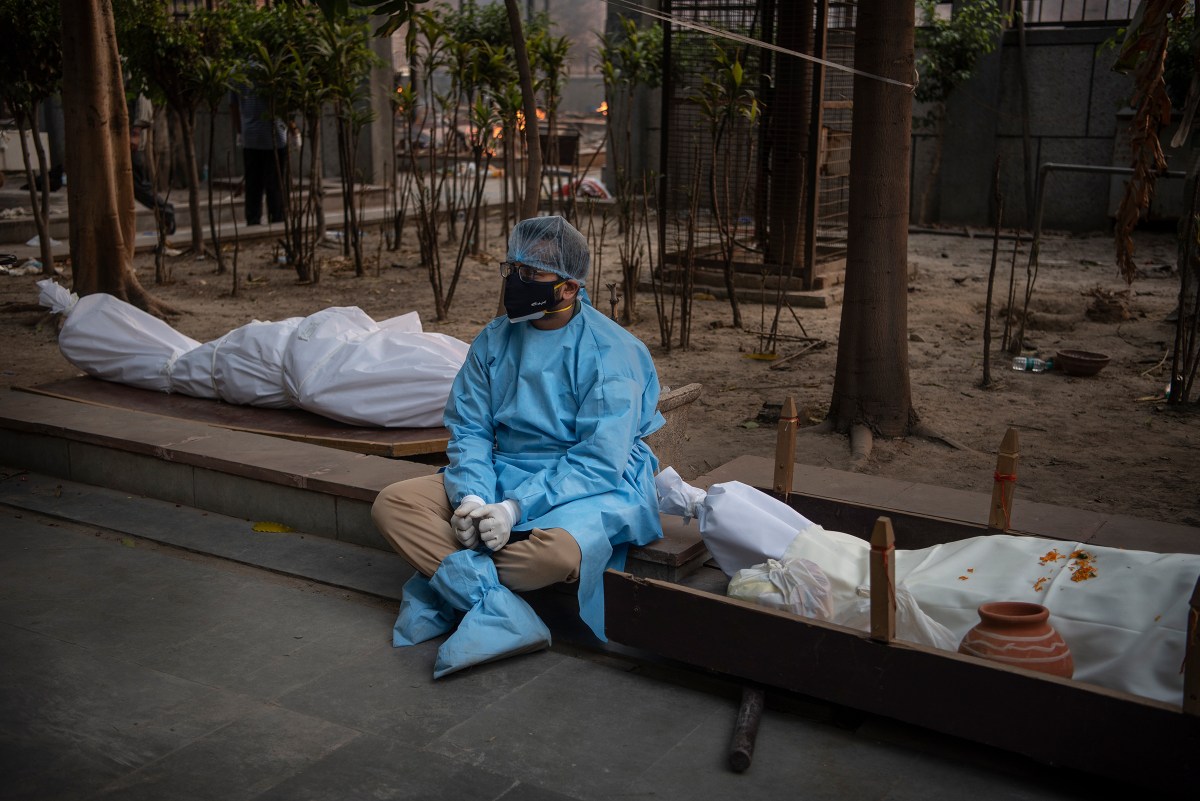
Dusk is falling in the Indian capital, and the acrid smell of burning bodies fills the air. It’s the evening of April 26, and at a tiny crematorium in a Delhi suburb, seven funeral pyres are still burning. “I have lived here all my life and pass through this area twice a day,” says local resident Gaurav Singh. “I have never seen so many bodies burning together.”
Scenes of mass death are now unavoidable in what’s often called the world’s largest democracy. Social media is filled with images of body bags and urgent requests for medical aid. Indians gasping for breath are being turned away from overwhelmed hospitals, sometimes simply because they don’t have lab reports confirming COVID-19 infection. Health workers plead for basic supplies. “We feel so angry,” says Kanchan Pandey, a community health worker in Azamgarh, Uttar Pradesh. “At least give us some masks and gloves. Is there no value to our lives?”
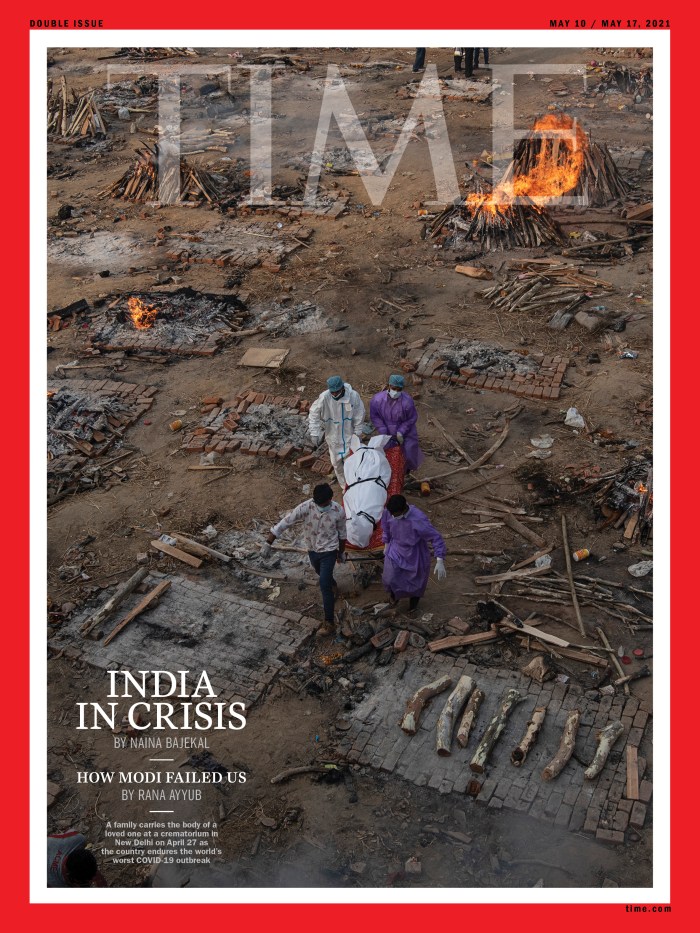
Such devastation would have been hard to imagine just a few months ago. Children were back in school, politicians were on the campaign trail, and people were dancing at weddings. “Soon the winter of our discontent will be made glorious summer,” India’s usually staid central bank said in a Jan. 21 bulletin. The next day, Prime Minister Narendra Modi heralded the spirit of atmanirbhar Bharat (self-reliant India) that had helped India secure victories in two major battles: on the cricket field against Australia and in the pandemic.
“A positive mindset always leads to positive results,” he declared. That ebullience did not fade even as epidemiologists noted that cases were starting to rise in a few key states. On Feb. 21, Modi’s ruling Bharatiya Janata Party passed a resolution unequivocally hailing the “visionary leadership of Prime Minister Modi” in turning India into a “victorious nation in the fight against COVID.”
Two months later, India’s crisis has blown well past the scale of anything seen elsewhere during the pandemic. For six of the seven days beginning April 21, India set new global records for daily COVID-19 infections, repeatedly surpassing the 300,000 tally previously set by the U.S. Its total confirmed cases—more than 18 million—are second only to that of the U.S. By official counts, more than 200,000 have now died, and some 3,000 are dying per day. The true daily death toll is at least two times higher, says Bhramar Mukherjee, an epidemiologist at the University of Michigan, from a caseload likely at least 10 times higher, based on modeling of data from the first wave.
India’s health system is on the brink of collapse. Hospitals across the country are running out of oxygen supplies, ventilators and beds. Indians are rushing to buy drugs like remdesivir, causing prices to surge, while labs struggle to process growing backlogs of COVID-19 tests. Its humanitarian crisis will not just be devastating for the country’s nearly 1.4 billion citizens. In the words of the director general of the World Health Organization, the pandemic is a global inferno: “If you hose only one part of it, the rest will keep burning.” In India, where crematoriums have been burning so long that their metal structures have started to melt, the hose isn’t even turned on yet.
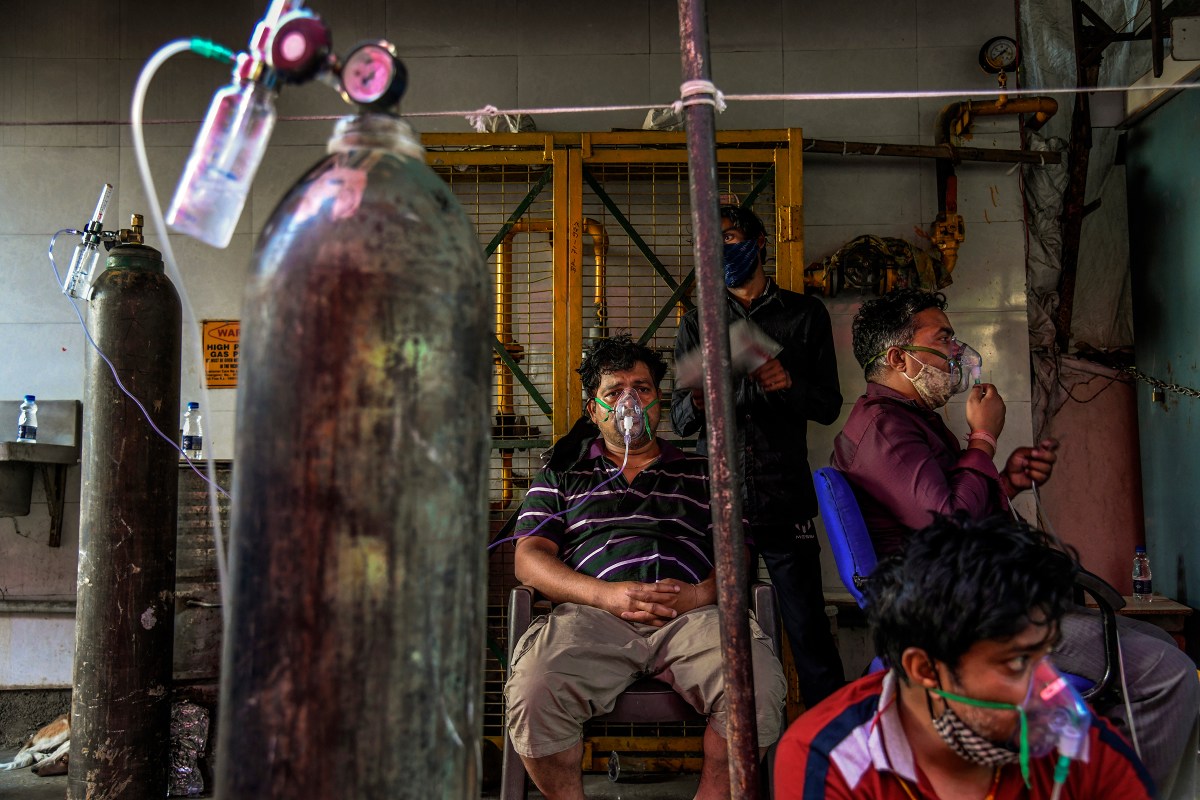
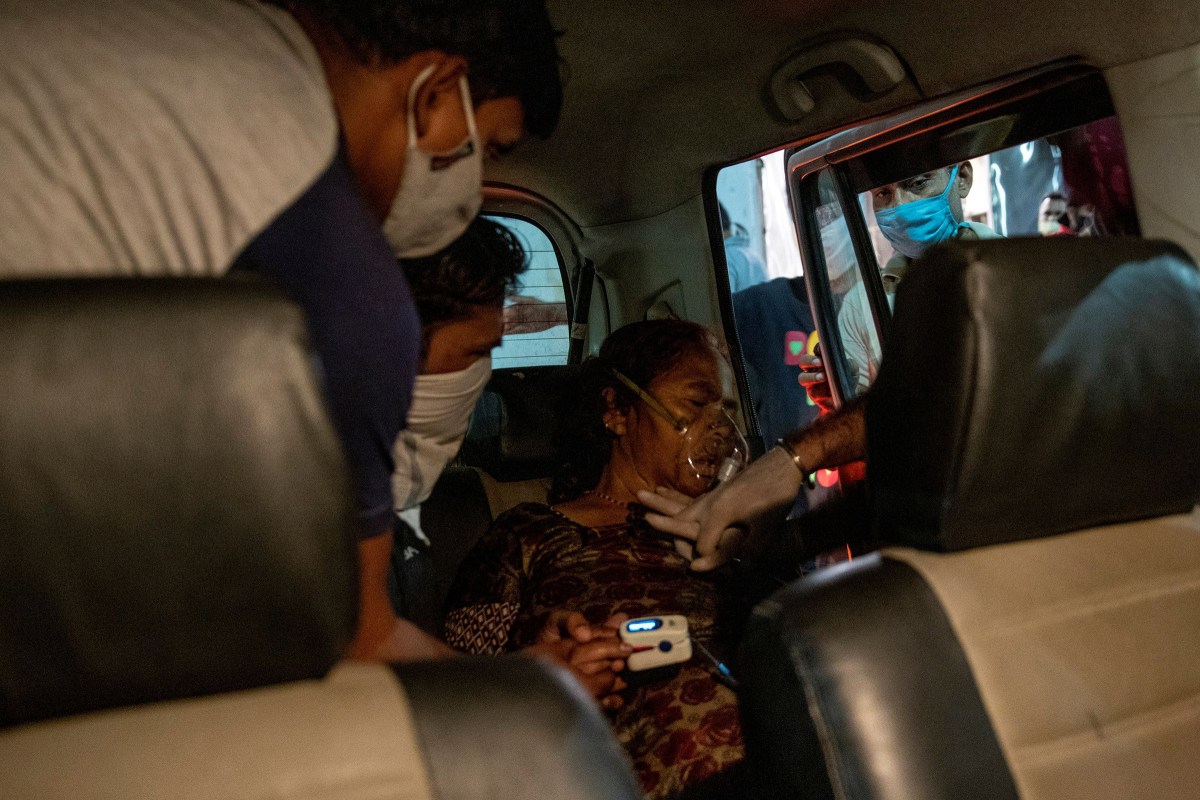

When the pandemic swept the world last year, India braced itself. Modi announced a sudden national lockdown in March, sparking an exodus of migrant workers, hundreds of whom died en route from cities to their hometowns. India’s economy was one of the hardest-hit in the pandemic, and lockdown was eased in June to allow businesses to reopen.
Cases peaked around 93,000 per day in September—less than a third of the daily tallies India is reporting this April—and then the curve began to flatten. A narrative emerged that India may have quietly achieved herd immunity, thanks to its comparatively young population—the median age is 27, and just 6.4% of Indians are over 65—and the fact that 66% of its population live in rural areas, spending most of their time outdoors. That optimistic account has since been complicated by two facts: cases are now hitting the young, and also surging in poor, rural states like Bihar and Uttar Pradesh.
Read More: How the Pandemic Is Reshaping India
The scale of the current crisis may have been driven by more-transmissible variants, though data are limited because of a lack of widespread genomic sequencing, says Dr. Ashish Jha, dean at Brown University School of Public Health. Other factors are contributing to the surge. The virus moves quickly through the multigenerational households that account for 4 in 10 Indian homes. Chronic underfunding of the health system over decades has also left hospitals ill-equipped to deal with the surge.
India’s total health care spending is a mere 3.5% of GDP, far lower than in countries ranging from the world’s wealthiest like France (11.3%) and the U.K. (10%) to other emerging economies like Brazil (9.5%) and South Africa (8.3%). And only a third of India’s health care spending comes from the government, with the rest mostly coming out of citizens’ pockets. “It essentially means that those who can afford to purchase health can have it,” says Dr. Gagandeep Kang, a virologist and public-policy researcher at Christian Medical College, Vellore.
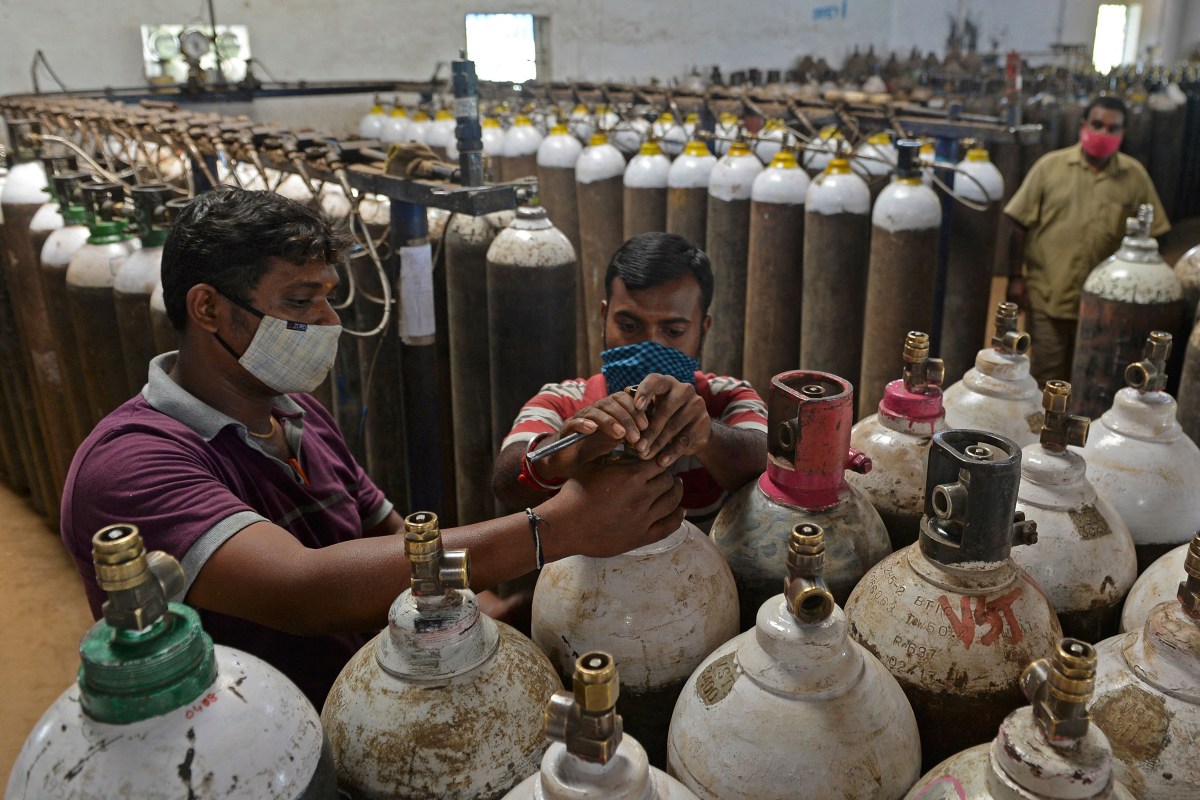
For all those vulnerabilities, experts say the current crisis could have been avoided if the government had acted earlier. “It is the virus, but it’s way more than the virus,” says Sumit Chanda, an infectious-disease expert at Sanford Burnham Prebys Medical Discovery Institute in California. “It’s equal parts complacency and incompetence.” Many Indians who took strict precautions last year abandoned their masks and gathered indoors when the broader public messaging implied that India had conquered the virus. They were “pristine prey,” as Mukherjee puts it, when the virus resurged this spring.
Crucially, this complacency was encouraged by the government’s “mission-accomplished mentality,” Chanda says. India’s leaders ignored warning signs in the data and the news of variants circulating in other countries. “By early March, it was really starting to be clear, and by late March, we had flashing red lights,” Brown’s Jha says. “Even then, the government was largely acting like there wasn’t anything serious going on.”
Read More: ‘This Is Hell.’ Prime Minister Modi’s Failure to Lead Is Deepening India’s COVID-19 Crisis
Rather than intensifying public-health messaging and ramping up interventions like banning mass gatherings and encouraging mask wearing, Modi and his officials did the opposite. They held mass rallies ahead of elections and promoted the Kumbh Mela, a Hindu pilgrimage that drew millions of worshippers to a single town—an event Jha predicts will end up “one of the biggest superspreader events in the history of humanity.” On April 17, after India had overtaken Brazil to become the second worst-hit country in the world, Modi told a rally in West Bengal that he was “elated” to see such a large crowd.
Modi’s insistence on atmanirbhar Bharat, the principle of self-reliance, also made India slow to approve and purchase foreign vaccines, including Pfizer-BioNTech’s, in favor of its own Covaxin. In the meantime, the government was keen to wield its heft as the “pharmacy of the world,” exporting doses even as it vaccinated only 0.2% of its population per day. “The complete policy complacency created a scenario where we allowed COVID-19 to get the better of us,” says Yamini Aiyar, president of the Centre for Policy Research in New Delhi. “We couldn’t have predicted the scale, but the complete lack of preparedness and crowding in pursuit of power is really unforgivable.”
Though Modi has been reluctant to admit failures handling the pandemic, his tone has become more somber as India has started airlifting oxygen generators and other supplies from abroad, with countries including Australia, the U.K. and even India’s rival Pakistan offering support. The White House is sending ventilators, test kits, PPE and oxygen concentrators to Delhi, and has overturned a ban on the export of raw materials India needs to ramp up vaccine production. In the short term, this emergency disaster relief—along with lockdowns in hot spots and a national mask mandate—is key to curbing the second wave.
In the longer term, vaccinations are desperately needed to prevent a third wave. Only 9% of Indians have had at least one vaccine dose (some, like Covaxin, require two doses), and the current pace of inoculation is too slow. It’s also not realistic, says Dr. Prabhat Jha, an epidemiologist at St. Michael’s Hospital, University of Toronto, for India to try to rapidly vaccinate 1 billion people. With limited vaccine supply, the most effective way to reduce transmission may be to target hot-spot areas and higher-risk people—which means India needs better data, fast.
How India handles its internal crisis is already having spillover effects. Modi has suspended India’s vaccine exports and is looking to import doses from other countries. This will have critical repercussions for millions in Africa and Latin America, who depend heavily on India’s vaccine production. Serum Institute, the Indian vaccine manufacturer, was already running behind. Expected to deliver 100 million doses for other countries by May, it so far has delivered only 20 million.
Read More: How Countries Around the World Are Helping India Fight COVID-19—and How You Can Too
India may be far less wealthy than the Western countries now lending support, but it also has the tools to emerge from this crisis. It has a history of successful, large-scale immunization programs for diseases like polio and tetanus, first-rate scientists, highly trained doctors and powerful networks of community health workers. What has been lacking, experts say, is the political will to get ahead of the crisis—and to use data and science to its advantage. “Without data—on who is testing positive, where the hot spots of cases and deaths are, who is really vulnerable—there’s no easy way for India to walk out of the pandemic,” Prabhat Jha says.
Many say the government has lost sight of its priorities. As cases soared to record highs in April, the government ordered Twitter and Facebook to remove posts critical of the authorities. Independent journalists have scrambled to identify massive discrepancies between official figures and deaths. “Those who died will never come back,” the Chief Minister of Haryana said in response to questions on April 26 about whether COVID-19 deaths were higher than official figures. “There is no point debating if the number of deaths is actually more or less.”
Modi entered the pandemic with sky-high approval ratings of nearly 80%, and polls from as recently as January suggest those numbers have barely dipped. Now, anger is rising among those spending their days trying to find beds for relatives or caring for their communities. But for most Indians, whether Modi can survive this crisis is now less urgent than whether they can. “The cries for help are growing—but not our capacities,” says Usha Thakur, a community health worker in Najafgarh, Delhi. “The governments are fighting amongst each other. They don’t care about the people but it’s the people who are losing their loved ones.”
—With reporting by Nilanjana Bhowmick/New Delhi, Alice Park/New York and Billy Perrigo/London

Asia’s reward for effectively tackling the COVID-19 pandemic will be some of the fastest economic growth in the world in 2021.
But, economic success could be thwarted by the region’s sluggish vaccine rollout and deadly new waves of COVID-19—especially the catastrophic outbreak that is claiming thousands of lives every day in India.
That is the promise—and the warning—of the Asian Development Bank’s 2021 economic forecast for the region, released Wednesday.
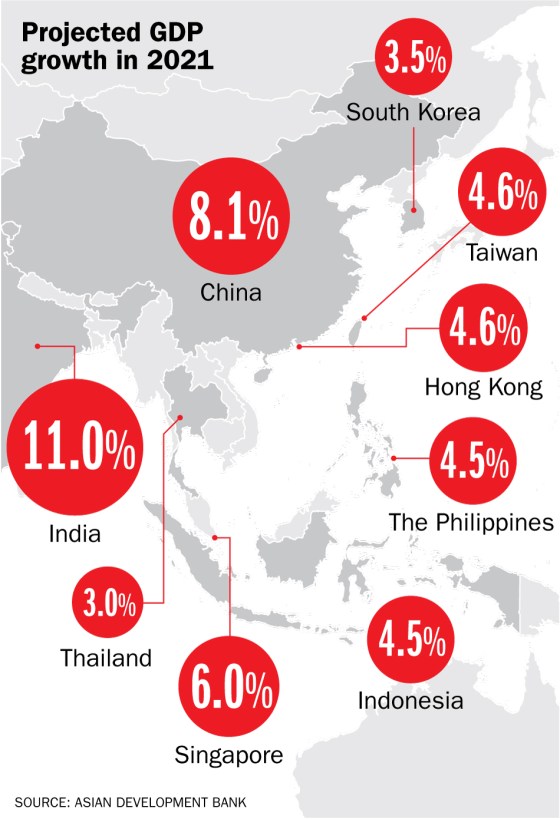
The 46 economies across the Asia-Pacific region, excluding Japan and Australia, are projected to rebound from the pandemic and grow by 7.3% this year.
Compare that with growth forecasts of 6.2% in the U.S. and 3.8% in the Eurozone, and Asian nations look likely to emerge much faster from the economic devastation caused by COVID-19.
The ADB, whose largest shareholders are Japan and the U.S., is a development bank that invests in projects meant to promote economic growth and reduce poverty across the Asia-Pacific region.
The severe outbreak in India drives home the urgency of governments across the region stepping up their lagging vaccination programs, says Abdul D. Abiad, the director of the ADB’s macroeconomic research division.
“It’s a race now between vaccinations/herd immunity, and new variants that can emerge and spread,” he tells TIME by email. “If the latter win, the recovery will lose traction.”
Although many places in Asia did relatively well at combatting the coronavirus, the region is now lagging in vaccine rollouts. The U.S. has administered at least one dose of a COVID-19 vaccine to more than 40% of its population, according to Oxford University’s Our World in Data project. In the wealthy city-state Singapore, a leader in Asia’s vaccination race, just over 20% of people have had a shot. In the financial hub Hong Kong, fewer than 12% of people have received a dose. Meanwhile, in India less than 9% of people, and in South Korea and Indonesia less than 5% of people, have had their first shot. Less than 2% of the population has received a first jab in Japan, the Philippines and Thailand—which are all battling new COVID-19 waves of their own.
The reasons for this are complex, but Abiad says right now the biggest challenge to vaccination programs in Asia is the supply of doses. “Demand from people wanting to get vaccinated exceeds available vaccine supply in most countries,” he says.
Read More: ‘I Pray for My Nani.’ The Survivor’s Guilt of Watching India’s COVID-19 Catastrophe Unfold From Afar
Other risks to Asia economic recovery include geopolitical tensions between the U.S. and China, limited vaccine effectiveness and long-term educational losses from school closures.
The region’s economic recovery will be uneven, as some countries battle fresh outbreaks. The ADB forecasts India to grow about 11% in 2021, though that figure is already at risk with the latest outbreak, says Abiad.
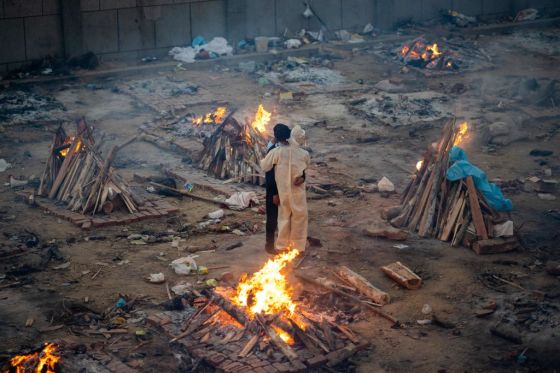
India is reporting more than 300,000 new cases a day with daily deaths nearing 3,000 (and the number of unofficial cases and deaths is believed to be much higher). Desperate pleas for oxygen and intensive care beds for sick patients have been circulating on social media platforms.
Still, in a press briefing, Yasuyuki Sawada, ADB’s chief economist, said India’s huge growth forecast remains “achievable.” He added: “India’s vaccine rollout is going well.”
Countries like China and Vietnam, which have strong exports of manufactured goods and kept COVID-19 under control have “been able to ride the wave of rising global demand,” Abiad says. China is forecast to grow more than 8% this year, after expanding by 2.3% in 2020—a year when many Asian countries fell into recession.
But even small COVID-19 outbreaks can threaten economic recovery. A COVID-19 surge of a few thousand cases a day in Thailand could set back the country’s plan to reopen tourism.
The Pacific region, also highly dependent on tourism, is expected to perform the worst of any area in the Asia-Pacific, with growth at a modest 1.4%. Travel bubbles are expected to help some countries start to recover.
“Tourist-dependent economies in the Pacific and elsewhere face a slow road back,” the ADB said.


