Beheshta Arghand, who made headlines when she interviewed the Taliban, has spoken out after fleeing the country.
from BBC News - World https://bbc.in/3mPmNRi

Tuesday, August 31, 2021
Afghanistan: How can the West stop terror bases?
The foreign secretary says the UK will fight ISIS by all means available - but what does that mean?
from BBC News - World https://bbc.in/2V6Ai3A
from BBC News - World https://bbc.in/2V6Ai3A
New world news from Time: The Botched Afghanistan Withdrawal Exposes a Dangerous Fault Line in Our Democracy
“The baby boomers’ turn is over,” said Marine Lieutenant Colonel Stuart Scheller in a video this past Friday. “I demand accountability, at all levels. If we don’t get it, I’m bringing it.” His post, which quickly went viral, was in response to the previous day’s suicide bombing at Kabul International Airport, which killed 13 U.S. service members and over 150 Afghans. In his nearly five-minute-long post, Scheller laments the Biden Administration’s handling of our withdrawal from Afghanistan and calls out senior military leaders, including Chairman of the Joint Chiefs of Staff General Mark Milley, Commandant of the Marine Corps General David Berger, and Secretary of Defense Lloyd Austin. “People are upset because their senior leaders let them down, and none of them are raising their hands and accepting accountability or saying, ‘We messed this up.’” But Scheller’s remarks go one step further than a simple demand for accountability. He goes onto quote Thomas Jefferson who said, “every generation needs a revolution.”
[time-brightcove not-tgx=”true”]
When I finished watching the video, I wasn’t sure what to make of it. My first instinct was to categorize it as a rant. The Biden Administration has handled the evacuation of Afghanistan with an unprecedented degree of incompetence, so a rant—even if inappropriate when delivered by an active-duty officer—seemed understandable. However, after more thought, I concluded that what I had seen was something else: an act of self-immolation.
Before his swift relief by senior officers on Friday, Scheller held battalion command. The Marine Corps is very selective about which officers it grooms to become battalion commanders; the fact that Scheller held that job means he was—before this past week—well-regarded, a Marine with a future in the Corps. Furthermore, Scheller is seventeen years into a twenty-year career. At twenty years, he would have been eligible for retirement at half his base pay with other benefits, like healthcare for life. It took him exactly four minutes and forty-five seconds to throw that all away. Scheller is a husband and a father. Why did he do this?
Until the past two weeks, Afghanistan was not a place, or an issue, most American cared about. In 2018, 42 percent of the country couldn’t even say whether or not we were still at war there. Over the past two decades, the war in Afghanistan has been waged by an all-volunteer military and funded through deficit spending. Unlike other wars, there has been no draft and no war tax. It’s often been said that while America’s military has spent the past twenty years at war, America itself has been at the mall. This has led to a massive civilian-military divide.
This botched withdrawal, in which many active duty as well as retired members of our military are receiving hundreds of phone calls and texts daily from their Afghan allies and their families who are now left to fend for themselves against the Taliban, has only deepened this sense of alienation among many who’ve served. One only need to look back through history—from Caesar’s Rome to Napoleon’s France—to see clearly that when a republic couples a large standing military with dysfunctional domestic politics, democracy doesn’t last long.
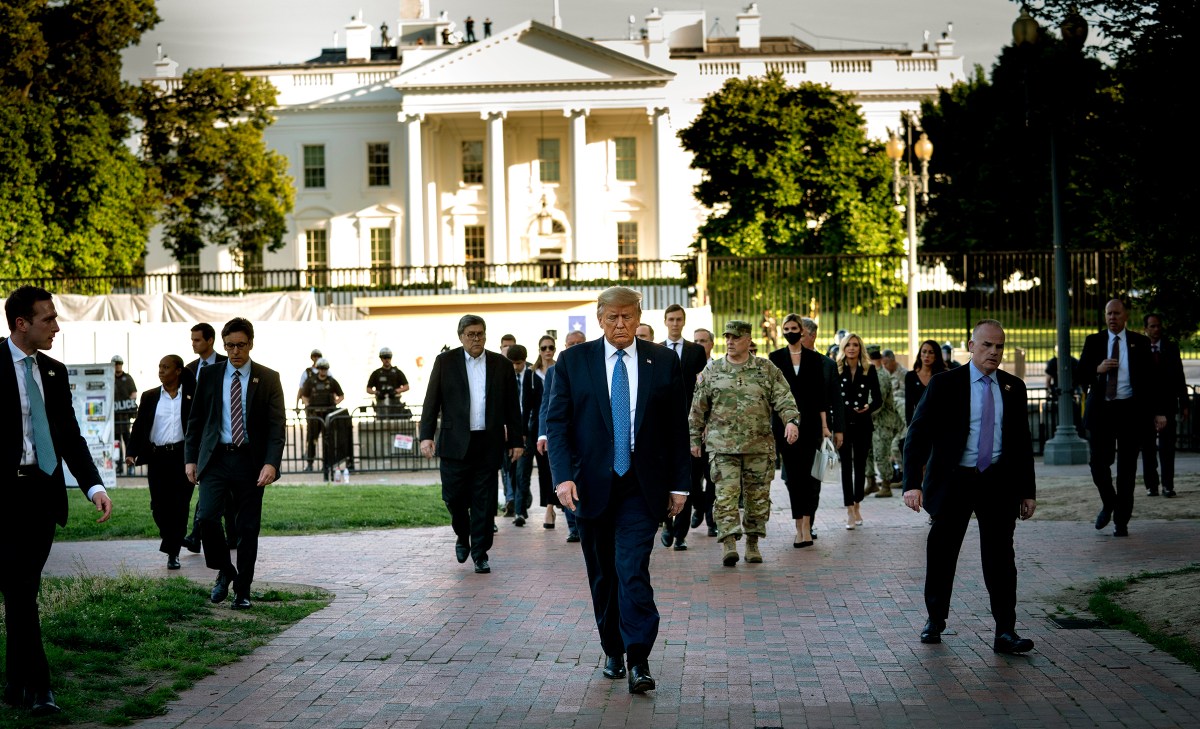
In the past eighteen months we have witnessed a politicization of the U.S. military with few precedents, from General Mark Milley marching across Lafayette Park in his fatigues with former President Donald Trump, to the Congressional testimony of senior officers—on everything from January 6th to right-wing extremism to critical race theory—becoming fodder for late-night cable news anchors who seek to position those in uniform on one side or another of the Democratic-Republican divide. Our military is, historically and ostensibly, an apolitical organization, but this has never meant military members do not have political views. Of course they do. But the military stays out of politics because it practices a code of omerta. Scheller’s video breaks that code.
The Marine Corps is a small community. As a lieutenant, Scheller served in 1st Battalion, 8th Marine Regiment (or “one eight” as we call it) a year after I did. I received his video from a friend, a lieutenant colonel who also served in 1/8. And one of the two infantry battalions guarding the North Gate at Kabul International Airport was 1/8, too; their current commander was a classmate of mine at Quantico. The all-volunteer military, the men and women who fought the post 9/11 wars, has become increasingly insulated from the broader American culture. The model of the citizen soldier that characterized the American military for generations has been replaced by a professional soldiering class, one that is increasingly closed, insular and subject to living in its own atomized reality—just like the rest of America does. This is dangerous.
It is particularly dangerous when military members feel misunderstood or even betrayed by the society they serve. Does everyone feel like Scheller? No, of course not. But after twenty years of war culminating in the botched evacuation of Kabul, I have heard his sense of betrayal echoed by many others.
So how we think about Scheller’s video matters. It’s important to understand that it was not so much a rant but an act of total self-immolation. And acts of self-immolation, if not heeded, have historically preceded catastrophic breakdowns in society. Remember Mohamed Bouazizi, the Tunisian fruit vendor? Or Thích Quảng Đức, the Vietnamese monk? One resulted in a rallying cry for the Arab Spring, and the other remains the iconic martyr of the Vietnam War. Read about them. You will notice that each burned for approximately four minutes and forty-five seconds.

Amid violent reprisals, Afghans fear the Taliban's 'amnesty' was empty
Reports suggest the Taliban are searching for, and allegedly killing, people they pledged to leave in peace.
from BBC News - World https://bbc.in/3gQktpb
from BBC News - World https://bbc.in/3gQktpb
Caldor fire: Lake Tahoe deserted as Californians evacuate
A major wildfire which began weeks ago is still spreading at the popular Californian holiday spot.
from BBC News - World https://bbc.in/38tIYUI
from BBC News - World https://bbc.in/38tIYUI
Fake Banksy NFT sold through artist's website for £244k
Duped buyer says he feels "burned" after apparent hack of Banksy website.
from BBC News - World https://bbc.in/3BqeRtK
from BBC News - World https://bbc.in/3BqeRtK
UNHCR 'cautiously optimistic' over working with Taliban
The UNHCR's Filippo Grandi says there has been some "positive" contact with the Taliban.
from BBC News - World https://bbc.in/3kEekxA
from BBC News - World https://bbc.in/3kEekxA
Afghans 'will struggle to survive or race to escape'
The BBC's Lyse Doucet reports from the Afghan capital, a day after the last US troops left.
from BBC News - World https://bbc.in/2WGqIof
from BBC News - World https://bbc.in/2WGqIof
YouTube signs Twitch video-game streamer Dr Lupo
Twitch says it wishes the American, 34, "nothing but the best in everything that comes next".
from BBC News - World https://bbc.in/3zwHogA
from BBC News - World https://bbc.in/3zwHogA
Mission: Impossible Covid shutdowns prompt lawsuit
Film maker Paramount alleges insurance payout for the latest Tom Cruise installment does not cover losses.
from BBC News - World https://bbc.in/2YecfRt
from BBC News - World https://bbc.in/2YecfRt
Does feeding garden birds do more harm than good?
How bird feeding could disrupt an ecological balance just beyond our windowsills and gardens.
from BBC News - World https://bbc.in/3Bq3QIU
from BBC News - World https://bbc.in/3Bq3QIU
What was left behind by US forces?
As US troops took off from Kabul, they abandoned 73 aircraft - all disabled.
from BBC News - World https://bbc.in/3Dx7By6
from BBC News - World https://bbc.in/3Dx7By6
The U.S. Is Off the E.U.’s ‘Safe List.’ What Does That Mean for Americans Traveling to Europe?

By Heather Murphy from NYT Travel https://nyti.ms/3BuhoD4


Sarah Rainsford: My last despatch before Russian expulsion
The BBC's Moscow correspondent has spent much of her life in Russia. This is her final report there.
from BBC News - World https://bbc.in/3sZc9Zg
from BBC News - World https://bbc.in/3sZc9Zg
Schemer or Naïf? Elizabeth Holmes Is Going to Trial.

By Erin Griffith and Erin Woo from NYT Technology https://nyti.ms/3mPbc4r
Brazil bank robbery: Hostages describe terrifying getaway car ordeal
Brazil hostages describe terrifying ordeal as bank robbers used them as human shields on getaway cars.
from BBC News - World https://bbc.in/2WzCC3U
from BBC News - World https://bbc.in/2WzCC3U
Cyprus on alert as Syrian oil slick spreads across Mediterranean
Modelling suggests fuel that leaked from a power plant last week will soon reach northern Cyprus.
from BBC News - World https://bbc.in/3BmBIWU
from BBC News - World https://bbc.in/3BmBIWU
Afghanistan: Taliban enter Kabul airport and celebrate by posing in aircraft
The group entered the Afghan capital's airport hours after the last US soldier left the country.
from BBC News - World https://bbc.in/3zxvzH4
from BBC News - World https://bbc.in/3zxvzH4
Tokyo Paralympics: Afghanistan athlete Hossain Rasouli makes debut after evacuation
Afghanistan evacuee Hossain Rasouli finally gets his chance to compete at the Tokyo Paralympics - and his opponents can't "help but feel joy".
from BBC News - World https://bbc.in/2UZB16s
from BBC News - World https://bbc.in/2UZB16s
Berlin university canteens cut meat from menus to curb climate change
The new menus are designed to reduce the carbon footprint of universities in the German capital.
from BBC News - World https://bbc.in/3zyK9hl
from BBC News - World https://bbc.in/3zyK9hl
Iowa Farmworker Gets Life in Prison for the Murder of Mollie Tibbetts

By Neil Vigdor from NYT U.S. https://nyti.ms/3kIKB6H
Monday, August 30, 2021
Fury as Covid crisis hits Australia's Aboriginal communities
Indigenous Australians say surging infections in remote areas should have been prevented.
from BBC News - World https://bbc.in/3gLk9bn
from BBC News - World https://bbc.in/3gLk9bn
Can apps move the #MeToo movement forward?
Reporting sexual harassment at work is getting easier thanks to new technologies.
from BBC News - World https://bbc.in/38tc729
from BBC News - World https://bbc.in/38tc729
From Bush to Biden: One war, four US presidents on Afghanistan
Two decades of conflict in Afghanistan shaped the legacies of each of these commanders-in-chief.
from BBC News - World https://bbc.in/3mMFHs0
from BBC News - World https://bbc.in/3mMFHs0
Para-Taekwondo: Taking 360 tornado kicks to Tokyo
For the first time, the Paralympic games will host a Para-Taekwondo competition.
from BBC News - World https://bbc.in/3mRIQXD
from BBC News - World https://bbc.in/3mRIQXD
Afghanistan: Fleeing the Taliban into Pakistan and leaving dreams behind
The BBC speaks to Afghans fleeing the Taliban into Pakistan at the Chaman Spin Boldak border.
from BBC News - World https://bbc.in/3zCdxDK
from BBC News - World https://bbc.in/3zCdxDK
Watch moment US military declares final flight out of Afghanistan
Top US general reveals last US aircraft took off from Hamid Karzai Airport ahead of deadline for withdrawal.
from BBC News - World https://bbc.in/38t5CfM
from BBC News - World https://bbc.in/38t5CfM
Gunfire as Taliban celebrate US leaving Afghanistan
Gunfire rang out as the BBC's Lyse Doucet reported on US troops' departure from Kabul.
from BBC News - World https://bbc.in/3DwOKmH
from BBC News - World https://bbc.in/3DwOKmH
Hurricane Ida: Louisiana assesses damage after storm
A million people in Louisiana are still are without electricity after a devastating storm hit.
from BBC News - World https://bbc.in/3mNzxb0
from BBC News - World https://bbc.in/3mNzxb0
New world news from Time: European Union Removes U.S. From Safe Travel List, Recommends Member States Reimpose Restrictions for American Tourists
(BRUSSELS) — The European Union recommended Monday that its 27 nations reinstate restrictions on tourists from the U.S. because of rising coronavirus infections there.
The decision by the European Council to remove the U.S. from a safe list of countries for nonessential travel reverses advice that it gave in June, when the bloc recommended lifting restrictions on U.S. travelers before the summer tourism season.
The guidance is nonbinding, however, and U.S. travelers should expect a mishmash of travel rules across the continent.
“Nonessential travel to the EU from countries or entities not listed (…) is subject to temporary travel restriction,” the council said in a statement. “This is without prejudice to the possibility for member states to lift the temporary restriction on nonessential travel to the EU for fully vaccinated travelers.”
[time-brightcove not-tgx=”true”]
The EU also removed Israel, Kosovo, Lebanon, Montenegro and North Macedonia from the list.
The EU has no unified COVID-19 tourism policy and national EU governments have the authority to decide whether they keep their borders open to U.S. tourists. Possible restrictions could include quarantines, further testing requirements upon arrival or even a total ban on all nonessential travel from the U.S.
More than 15 million Americans a year visited Europe before the coronavirus crisis, and new travel restrictions could cost Europe billions.
The recommendation doesn’t apply to Britain, which formally left the EU at the beginning of the year and opened its borders to fully vaccinated travelers from the U.S. earlier this month.
The United States remains on Britain’s “amber” travel list, meaning that fully vaccinated adults arriving from the U.S. to the U.K. don’t have to self-isolate. A COVID-19 test is required three days before arrival in the U.K. and another test is needed two days after arriving.
Meanwhile, the United States has yet to reopen its own borders to EU tourists, despite calls from the bloc for the Biden administration to lift its ban. Adalbert Jahnz, the European Commission spokesperson for home affairs, said Monday that the EU’s executive arm remained in discussions with the U.S. administration as both sides have so far failed to find a reciprocal approach.
In addition to the epidemiological criteria used to determine the countries for which restrictions should be lifted, the European Council said that “reciprocity should also be taken into account on a case by case basis.”
The European Council updates the safe travel list based on criteria relating to coronavirus infection levels. It gets reviewed every two weeks. The threshold for being on the EU list is having not more than 75 new COVID-19 cases per 100,000 inhabitants over the last 14 days.
Last week in the U.S. new coronavirus cases averaged over 152,000 a day, turning the clock back to the end of January, and the number of hospitalized COVID-19 patients was around 85,000, a number not seen since early February.
U.S. coronavirus deaths have been over 1,200 a day for several days, seven times higher than they were in early July.

Afghanistan drone strike: 'Ten people died here.. including my daughter'
A family comb through rubble for remains of relatives they say were killed by a US drone strike.
from BBC News - World https://bbc.in/3yslk5l
from BBC News - World https://bbc.in/3yslk5l
Afghan left behind by UK: I'm fighting to stay alive
An Afghan who had authorisation to fly to the UK speaks to the BBC about his struggle to escape.
from BBC News - World https://bbc.in/3BkwivE
from BBC News - World https://bbc.in/3BkwivE
Covid: EU set to impose travel restrictions on US as cases rise
The European Union is set to recommend barring American travellers as US hospital admissions peak.
from BBC News - World https://bbc.in/38s1hK2
from BBC News - World https://bbc.in/38s1hK2
Kanye West: Donda released by Universal without my say, artist claims
The rapper says his record label released his delayed 10th album without his permission.
from BBC News - World https://bbc.in/2WB1kAg
from BBC News - World https://bbc.in/2WB1kAg
At Birth, She Already Had a Case File. At 7 Years Old, She Was Dead.

By Michael Wilson, Ashley Southall and Chelsia Rose Marcius from NYT New York https://nyti.ms/3kwCwBU
Covid surge 'deeply worrying' in Europe as vaccinations dip - WHO
Europe could see another 236,000 deaths by December as vaccinations slow, a WHO official predicts.
from BBC News - World https://bbc.in/3kyOISN
from BBC News - World https://bbc.in/3kyOISN
Paris speed limit falls to 30km/h
The mayor wants the French capital to become cleaner in the run-up to the 2024 Olympics.
from BBC News - World https://bbc.in/3mKtuUL
from BBC News - World https://bbc.in/3mKtuUL
Palestinian President Abbas holds rare talks with Israeli minister
It was the Palestinian president's first official meeting with a senior Israeli since 2010.
from BBC News - World https://bbc.in/38lWwSd
from BBC News - World https://bbc.in/38lWwSd
Afghanistan: US investigating civilian deaths in Kabul strike
The strike aimed to stop a suicide bomber, but killed six children and four adults from one family.
from BBC News - World https://bbc.in/3mJR3Nb
from BBC News - World https://bbc.in/3mJR3Nb
China cuts children's online gaming to one hour
Regulators are restricting game-playing for under 18s to an hour on Fridays, weekends and holidays
from BBC News - World https://bbc.in/3tbhooV
from BBC News - World https://bbc.in/3tbhooV
Milan fire: Flames engulf modern 20-storey block of flats
The tower is only 10 years old and questions are being asked about how the fire spread so dramatically.
from BBC News - World https://bbc.in/38pvLw6
from BBC News - World https://bbc.in/38pvLw6
American University of Afghanistan students and relatives trying to flee were sent home.

By Farnaz Fassihi from NYT World https://nyti.ms/2WAHdmh
New world news from Time: China Sees Opportunity After America’s Withdrawal From Afghanistan. But Can Beijing Do Any Better?
The speed of the Taliban’s takeover of Afghanistan has been a surprise; China’s reaction to the “U.S. humiliation” anything but.
As the Aug. 31 deadline for U.S. troops to leave the nation approaches, with thousands of Afghans and foreign nationals still desperately trying to board evacuation planes amid bloody terrorist attacks, Beijing’s official media has been pointing fingers.
“The disaster in Afghanistan was caused by the U.S. and its allies,” said the state-run Global Times, whose editor tweeted a photo of calm scenes around the Chinese embassy in Kabul while the U.S. legation was overrun. “Death, bloodshed and a tremendous humanitarian tragedy are what the United States has truly left behind in Afghanistan,” said state news wire Xinhua.
[time-brightcove not-tgx=”true”]
China did not oppose the U.S.-led invasion in 2001. In fact, Beijing backed U.N. Security Council resolutions that endorsed international efforts to oust the Afghan Taliban, with then President Jiang Zemin concerned about Al Qaeda militants spilling over its shared border into restive Xinjiang province. Just days after the Taliban fell, in December 2001, China sent a Foreign Ministry delegation to Kabul with a message of congratulations for new President Hamid Karzai, whom Jiang hosted in Beijing a month later.
But this is now being overlooked as state media portrays the present Taliban as a more moderate group than the one ousted in 2001—even attempting to characterize it as primarily an anti-American one. The Communist Party People’s Daily flatteringly credited the Taliban’s victory to its supposed adoption of Mao Zedong’s “people’s war” tactic: rallying the support of the rural population, while drawing the enemy deep into the countryside.
Read more: An Afghan Teacher on How the World Can Protect Girls From the Taliban
“Among the Chinese population, there is actually pretty strong admiration of the Taliban this time around,” Sun Yun, director of the China Program at the Stimson Center, told a recent meeting of the Shanghai Foreign Correspondents Club.
Ever the pragmatist, Beijing has always maintained links with the Taliban regardless of who was in power in Kabul. In 2000, before 9/11 stunned the world, China’s ambassador to Pakistan met with then Taliban chief, Mullah Omar, in one of the hardliner’s only meetings with foreign diplomats. In 2015, China hosted negotiations between the Taliban and Afghan officials in Xinjiang’s capital Urumqi, with a Taliban delegation visiting Beijing four years later.
Last month, with a Taliban takeover looking increasingly obvious, Chinese Foreign Minister Wang Yi received a nine-strong Taliban delegation in China’s northeastern port city of Tianjin, including group number two Abdul Ghani Baradar. There, Wang called the insurgents “a pivotal military and political force.”
Samina Yasmeen, director of the Centre for Muslim States and Societies at the University of Western Australia, says China is trying to create a zone of influence, which extends beyond Pakistan to include Afghanistan, Iran and Iraq. The underlining supposition is that if China can rebuild Afghanistan, it’s model must be superior to the Western one.
“The Chinese are looking at the region, saying, ‘Where are the areas where there’s dissatisfaction with the United States, either at the government level or among the people?’” says Yasmeen. “And that’s where they are signing comprehensive strategic partnerships, especially if it helps them with energy resources.”

Will Afghanistan become part of China’s Belt and Road?
Previously, China’s overriding interest in Afghanistan was security. Rahimullah Yousafzai, a Pakistani journalist and security expert, who once interviewed Osama Bin Laden, says that under pressure from Beijing the Afghan Taliban have been telling Uighur militants that China is off-limits. “The Taliban don’t want to create a problem for China,” says Yousafzai.
Today, in the wake of the U.S. withdrawal, Chinese strategists are thinking bigger, and eyeing deals to exploit Afghanistan’s mineral deposits. An Afghan parallel to the China Pakistan Economic Corridor—the $50 billion development of factories, power plants and pipelines from Kashgar in Xinjiang province to the Pakistani port of Gwadar in the Persian Gulf—might even be on the cards.
In 2016, India signed a $500 million deal to invest in Iran’s Chabahar port, which was seen as a strategic rival to Gwadar. In the years since, however, India’s relations with Iran have strained under pressure from the U.S., while Beijing in March inked a deal with Tehran to invest $400 billion over 25 years. Some strategists believe that China is well-placed to take over Chabahar and link it to China with a corridor though Afghanistan.
“If China were able to extend the Belt-and-Road from Pakistan through to Afghanistan—for example, with a Peshawar-to-Kabul motorway—it would open up a shorter land route to gain access to markets in the Middle East,” wrote Former People’s Liberation Army Colonel Zhou Bo in a New York Times op-ed.

China, adds Zhou, “is ready to step into the void left by the hasty U.S. retreat to seize a golden opportunity.”
But Afghanistan isn’t called the “graveyard of empires” for nothing, and China’s “Peace through development” model has failed to completely quell Tibet and Xinjiang. Beijing also has a patchy record overseas, with states where it has gained tremendous influence—Myanmar, Venezuela, Sudan, among others—perpetually consumed by strife.
Last Thursday’s suicide bombing at Kabul Airport demonstrates that Taliban control is by no means absolute. The attack, which killed at least 170 Afghans as well as 13 U.S. military personnel, was claimed by ISIS in Khorasan, otherwise known as ISIS-K, an Islamist group opposed to both the U.S. and the Taliban. They were believed to be behind a particularly horrifying attack on a maternity hospital in Kabul in 2020.
In Tianjin, Wang urged the Taliban “to draw a line” between itself and terrorist groups, particularly the East Turkestan Islamic Movement, which has launched attacks in Xinjiang. But whether the Taliban’s leadership can maintain political discipline among the group’s 70,000 fighters is another matter. The same goes for the group’s ability to police its vast, porous territory. That last week’s assailants managed to slip past Taliban checkpoints points to failings at best, and collusion at worst, on the part of Afghanistan’s new rulers.

China’s record in Pakistan
That investment and strong government ties do not necessarily spell security is already evident across Afghanistan’s eastern border in Pakistan. China’s all-weather ally has long been bankrolled by Beijing yet militants have attacked Chinese interests in Pakistan at least four times in recent months, making an apparent assassination attempt on China’s ambassador in April, and launching an attack on Chinese workers last month that killed 13 and injured 41.
Attacks against Chinese infrastructure used to be primarily perpetrated by separatist groups—typically from Balochistan, where Gwadar port in based— because China was the Pakistani state’s chief local sponsor. Increasingly, however, militant Islamists like the Pakistani Taliban are taking aim at China, indicating Beijing’s appearance in the crosshairs of a broader Jihadist campaign. Riled by the persecution of Uighur Muslims, Al Qaeda ideologues have begun talking about China as the “new imperialists.”
It must not be forgotten that China indirectly contributed to the formation of the Pakistani Taliban in the first place. In March 2007, students at two seminaries affiliated with Islamabad’s Red Mosque launched vigilante raids against “un-Islamic” targets such as DVD vendors, beauty parlors and a Chinese-run massage parlor that they accused of being a brothel. Ten Chinese nationals were kidnapped, with the female masseurs paraded on TV in burqas before being released. Outraged, the Chinese government put huge pressure on the Pakistani military to rein in the extremists, culminating in a week-long siege of the Red Mosque that July and 154 deaths.
Read more: All Is Not Lost in Afghanistan. Yet
Such bloodshed at a holy site coalesced support for hardliners in Pakistan, providing a rallying point for myriad Islamist groups that, over the next five months, committed 56 suicide attacks claiming almost 3,000 Pakistani lives. Their savagery was demonstrated by the 2014 Peshawar school massacre that saw 141 people killed, 132 of them children, in an atrocity that the Afghan Taliban condemned. In December, about 13 of these Islamist groups united to form the Pakistani Taliban.
Of course, Beijing could not have foreseen the chain of events when it put pressure on Pakistan to protect Chinese citizens in 2007. But in this fractured crucible of conflicting religious, tribal and political interests, even the most straightforward diplomatic move can create effects that are impossible to predict. China cannot expect to pursue sustained engagement in Afghanistan without risking significant blowback.
“While there may be a lot of gloating in China that they have a better possibility of influencing this region, I think they’re going to find it very hard,” says Yasmeen. “Afghanistan is not there for the taking.”

Brazil bank robbers tie hostages to getaway cars
Armed gang members took hostages as human shields, after a bank robbery in the city of Araçatuba.
from BBC News - World https://bbc.in/3jqw6or
from BBC News - World https://bbc.in/3jqw6or
Sunday, August 29, 2021
Jeanne Robertson, 77, Down-Home Humorist With a Pageant Past, Dies

By Annabelle Williams from NYT Arts https://nyti.ms/38oD0o2
Ed Asner, Emmy-Winning Star of ‘Lou Grant’ and ‘Up,’ Dies at 91

By Anita Gates from NYT Arts https://nyti.ms/3yt40xp
Yongbyon: UN says North Korea appears to restart nuclear reactor
A UN report says the reactor, which can produce plutonium for weapons, has been active since July.
from BBC News - World https://bbc.in/3mJJ0jG
from BBC News - World https://bbc.in/3mJJ0jG
Ethiopia's economy battered by Tigray war
Food prices are rising, the currency's value is falling and investor confidence is shaken.
from BBC News - World https://bbc.in/3zsGVMD
from BBC News - World https://bbc.in/3zsGVMD
Turkey lockdown: Pigeon-keeping in Istanbul on the rise
The ancient art of pigeon fancying, popular across Asia, enjoyed a revival during the pandemic.
from BBC News - World https://bbc.in/3kDxbbW
from BBC News - World https://bbc.in/3kDxbbW
Bodies of US troops killed in Kabul returned to America
A "dignified transfer" ceremony takes place at Dover Air Force Base, Delaware, to receive their remains.
from BBC News - World https://bbc.in/3gJq1BY
from BBC News - World https://bbc.in/3gJq1BY
Possum skin cloaks: Reviving an Aboriginal cultural tradition
Indigenous people in south-east Australia are reviving an expression of cultural identity.
from BBC News - World https://bbc.in/3yCLHpD
from BBC News - World https://bbc.in/3yCLHpD
Japan's huge army of under-employed ex-housewives
Why women are still battling for better jobs in the world's third largest economy.
from BBC News - World https://bbc.in/38pQnnO
from BBC News - World https://bbc.in/38pQnnO
In India, growing clamour to criminalise rape within marriage
An Indian court ruled that forced sex with a spouse is not rape. Campaigners say it's time for new laws.
from BBC News - World https://bbc.in/3zwBtbp
from BBC News - World https://bbc.in/3zwBtbp
Ed Asner: Lou Grant and Up actor dies aged 91
He'll be remembered for his roles as TV newsman Lou Grant and the lead voice role in Pixar hit Up.
from BBC News - World https://bbc.in/2UXVKaV
from BBC News - World https://bbc.in/2UXVKaV
Jamaican reggae icon Lee 'Scratch' Perry dies aged 85
Perry, a legendary singer and music producer, is known for his pioneering experiments with dub.
from BBC News - World https://bbc.in/3ktc784
from BBC News - World https://bbc.in/3ktc784
Afghanistan: US drone strike 'eliminates airport bomb threat'
The strike on a vehicle prevented another suicide bombing by Islamic State, military officials say.
from BBC News - World https://bbc.in/3DCupwz
from BBC News - World https://bbc.in/3DCupwz
Max Verstappen declared winner of aborted rain-hit Belgian Grand Prix
Red Bull's Max Verstappen declared the winner of a Belgian Grand Prix that lasted only two laps behind the safety car.
from BBC News - World https://bbc.in/3jmykVX
from BBC News - World https://bbc.in/3jmykVX
Hurricane Ida: 'Catastrophic' storm surge as winds move onshore
The storm is bringing with it a potentially "catastrophic" storm surge of up to 4.8m, forecasters say.
from BBC News - World https://bbc.in/3jrELal
from BBC News - World https://bbc.in/3jrELal
New world news from Time: U.S. Drone Strike Kills Suicide Bombers Targeting Kabul Airport
KABUL, Afghanistan — A U.S. drone strike Sunday struck a vehicle carrying “multiple suicide bombers” from Afghanistan’s Islamic State affiliate before they could target the ongoing military evacuation at Kabul’s international airport, American officials said.
There were few initial details about the incident, as well as a rocket that struck a neighborhood just northwest of the airport, killing a child. The Taliban initially described the two strikes as separate incidents, though information on both remained scarce and witnesses heard only one large blast Sunday in the Afghan capital.
The airstrike came as the United States winds down a historic airlift that saw tens of thousands evacuated from Kabul’s international airport, the scene of much of the chaos that engulfed the Afghan capital since the Taliban took over two weeks ago. After an Islamic State affiliate’s suicide attack that killed over 180 people, the Taliban increased its security around the airfield as Britain ended its evacuation flights Saturday.
[time-brightcove not-tgx=”true”]
U.S. military cargo planes continued their runs into the airport Sunday, ahead of a Tuesday deadline earlier set by President Joe Biden to withdraw all troops from America’s longest war. However, Afghans remaining behind in the country worry about the Taliban reverting to their earlier oppressive rule — something fueled by the recent shooting death of a folk singer in the country by the insurgents.
Two American military officials, who spoke on condition of anonymity to discuss military operations, called the airstrike successful and said the vehicle carried multiple bombers.
U.S. Navy Capt. Bill Urban, a spokesman for the American military’s Central Command, called the drone strike an action taken in “self-defense.” He said authorities continued “assessing the possibilities of civilian casualties, though we have no indications at this time.”
“We are confident we successfully hit the target,” Urban said. “Significant secondary explosions from the vehicle indicated the presence of a substantial amount of explosive material.”
Taliban spokesman Zabihullah Mujahid earlier said in a message to journalists that the U.S. strike targeted a suicide bomber as he drove a vehicle loaded with explosives. Mujahid offered few other details.
The strike was the second by America since the airport suicide bombing. On Saturday, a strike in Nangarhar province killed an Islamic State member believed to be involved in planning attacks against the United States in Kabul.
The Sunni extremists of IS, with links to the group’s more well-known affiliate in Syria and Iraq, have carried out a series of brutal attacks, mainly targeting Afghanistan’s Shiite Muslim minority, including a 2020 assault on a maternity hospital in Kabul in which they killed women and infants.
The Taliban have fought against Islamic State militants in Afghanistan, where the Taliban have wrested back control nearly 20 years after they were ousted in a U.S.-led invasion. The Americans went in following the 9/11 attacks, which al-Qaida orchestrated while being sheltered by the group.
The rocket attack struck Kabul’s Khuwja Bughra neighborhood, said Rashid, the Kabul police chief who goes by one name. Video obtained by The Associated Press in the aftermath of the attack showed smoke rising from building at the site around a kilometer (half a mile) from the airport.
No group immediately claimed the attack, however militants have fired rockets in the past.
Meanwhile, the family of a folk singer north of Kabul say the Taliban killed him under unclear circumstances in recent days.
The shooting of Fawad Andarabi came in the Andarabi Valley for which he was named, an area of Baghlan province some 100 kilometers (60 miles) north of Kabul. The valley had seen upheaval since the Taliban takeover, with some districts in the area coming under the control of militia fighters opposed to the Taliban rule. The Taliban say they have since retaken those areas, though neighboring Panjshir in the Hindu Kush mountains remains the only one of Afghanistan’s 34 provinces not under its control.
The Taliban previously came out to Andarabi’s home and searched it, even drinking tea with the musician, his son Jawad Andarabi told the AP. But something changed Friday.
“He was innocent, a singer who only was entertaining people,” his son said. “They shot him in the head on the farm.”
His son said he wanted justice and that a local Taliban council promised to punish his father’s killer.
Mujahid, the Taliban spokesman, told the AP that the insurgents would investigate the incident, but had no other details on the killing.
Andarabi played the ghichak, a bowed lute, and sang traditional songs about his birthplace, his people and Afghanistan as a whole. A video online showed him at one performance, sitting on a rug with the mountains of home surrounding him as he sang.
“There is no country in the world like my homeland, a proud nation,” he sang. “Our beautiful valley, our great-grandparents’ homeland.”
Karima Bennoune, the United Nations special rapporteur on cultural rights, wrote on Twitter that she had “grave concern” over Andarabi’s killing.
“We call on governments to demand the Taliban respect the #humanrights of #artists,” she wrote.
Agnes Callamard, the secretary-general of Amnesty International, similarly decried the killing.
“There is mounting evidence that the Taliban of 2021 is the same as the intolerant, violent, repressive Taliban of 2001,” she wrote on Twitter. “20 years later. Nothing has changed on that front.”
Also on Sunday, private banks across Afghanistan resumed their operations. However, they limited withdrawals to no more than the equivalent of $200 a day.
While some complained of still being unable to access their money, government employees say they haven’t been paid over the last four months. The Afghani traded around 90.5 to $1, continuing its depreciation as billions of dollars in the country’s reserves remain frozen overseas.
___
Akhgar reported from Istanbul, Baldor from Washington and Gambrell from Dubai, United Arab Emirates.

Yemen war: Drone attack on government airbase kills 30 soldiers
Pro-government forces say Houthi rebels targeted the base with missiles and armed drones.
from BBC News - World https://bbc.in/3jph0j2
from BBC News - World https://bbc.in/3jph0j2
Mountain lion: US mother fights off animal attacking her son
She hit the animal with her bare hands as it attacked the five-year-old at their home in California.
from BBC News - World https://bbc.in/3yskTIc
from BBC News - World https://bbc.in/3yskTIc
A country abandoned: BBC's John Simpson on Afghanistan
As foreign forces end their 20-year campaign, our world affairs editor considers what has been achieved.
from BBC News - World https://bbc.in/2WyDrt6
from BBC News - World https://bbc.in/2WyDrt6
Afghanistan: Taxi driver, shopkeeper: UK victims of Kabul attack
Relatives and friends of Mohammad Niazi and Musa Popal pay tribute after Thursday's blasts.
from BBC News - World https://bbc.in/3zEk8NC
from BBC News - World https://bbc.in/3zEk8NC
What now for Afghans arriving in America?
Afghans land to start a new life in the US as hope dims for those left behind to face the Taliban.
from BBC News - World https://bbc.in/3yqR62P
from BBC News - World https://bbc.in/3yqR62P
Emotional arrival for Afghan Paralympians in Tokyo
The safe arrival of Afghanistan's Paralympic athletes in Tokyo sends out "a very strong message of hope", says the International Paralympic Committee.
from BBC News - World https://bbc.in/3jrj9ed
from BBC News - World https://bbc.in/3jrj9ed
Afghanistan: 'Thousands more left behind...and feel terrified'
The BBC's Lyse Doucet in Kabul says many people are still desperately trying to leave, as evacuations draw to a close.
from BBC News - World https://bbc.in/3zum6A6
from BBC News - World https://bbc.in/3zum6A6

Saturday, August 28, 2021
How the Delta Variant Infiltrated an Elementary School Classroom

By Sabrina Imbler and Emily Anthes from NYT Health https://nyti.ms/3BAp3jB
As U.S. Troops Searched Afghans, a Bomber in the Crowd Moved In

By Helene Cooper, Eric Schmitt and Thomas Gibbons-Neff from NYT U.S. https://nyti.ms/3ztjYZs
Brazil's Jair Bolsonaro says he will be killed, arrested or re-elected
Brazil's right-wing president is trying to rally support ahead of next year's election.
from BBC News - World https://bbc.in/2WyKK4y
from BBC News - World https://bbc.in/2WyKK4y
Herat under the Taliban: residents on the new rulers
People in Afghanistan’s third-largest city, Herat, explain how life has changed in recent weeks.
from BBC News - World https://bbc.in/3kxzKwn
from BBC News - World https://bbc.in/3kxzKwn
Agnes Sithole: The woman who fought South Africa's sexist marriage laws
Agnes Sithole became an unlikely hero after her husband of nearly 50 years tried to sell their home.
from BBC News - World https://bbc.in/3zst09h
from BBC News - World https://bbc.in/3zst09h
Your pictures on the theme of 'my summer'
A selection of striking images from our readers around the world.
from BBC News - World https://bbc.in/3yuVXQl
from BBC News - World https://bbc.in/3yuVXQl
Afghanistan: Black Hawks and Humvees - military kit now with the Taliban
As the insurgents swept through Afghanistan they inherited an arsenal of American-made equipment.
from BBC News - World https://bbc.in/3gHEMoO
from BBC News - World https://bbc.in/3gHEMoO
'We were hurt in bombs through no fault of our own'
Jennifer McNern lost both her legs and Margaret Yeaman was blinded in separate IRA bomb attacks.
from BBC News - World https://bbc.in/3kxaB4H
from BBC News - World https://bbc.in/3kxaB4H
Afghanistan: 'I helped the US military, now help me save my family'
Afghans living in Texas plead for help to save the lives of loved ones left behind in Afghanistan.
from BBC News - World https://bbc.in/3BjPJEW
from BBC News - World https://bbc.in/3BjPJEW
Hurricane Ida: Thousands flee as storm bears down on Louisiana
Ida is forecast to be one of the strongest storms to hit Louisiana in 150 years.
from BBC News - World https://bbc.in/3mIu858
from BBC News - World https://bbc.in/3mIu858
Europe migrant crisis: More than 500 people rescued off Italian island
Italian coastguards rescue 539 people from a small fishing boat believed to have set off from Libya.
from BBC News - World https://bbc.in/3yqz2pp
from BBC News - World https://bbc.in/3yqz2pp
Afghan refugee heading to UK gives birth at 30,000 feet
Soman Noori gives birth to baby girl Havva while flying to Birmingham, with no doctor on board.
from BBC News - World https://bbc.in/38spzmR
from BBC News - World https://bbc.in/38spzmR
Afghan evacuations wind down at Kabul airport
The US is still airlifting civilians from Kabul airport but the UK has now ended evacuation flights.
from BBC News - World https://bbc.in/38jgf51
from BBC News - World https://bbc.in/38jgf51
New world news from Time: Final U.K. Evacuation Flight Leaves Kabul as Troops Head Home
LONDON — Britain ended evacuation flights from Kabul airport on Saturday and began bringing troops home, even as the U.K.’s top military officer acknowledged “we haven’t been able to bring everybody out.”
Britain’s defense ministry said the final flight for Afghan citizens had left Kabul and further flights over the weekend will bring home British troops and diplomats, though they may also carry a few remaining U.K. or Afghan civilians.
Britain’s ambassador to Afghanistan, Laurie Bristow, said from Kabul airport that it was “time to close this phase of the operation now.”
“But we haven’t forgotten the people who still need to leave,” Bristow said in a video posted on Twitter. “We’ll continue to do everything we can to help them. Nor have we forgotten the brave, decent people of Afghanistan. They deserve to live in peace and security.”
[time-brightcove not-tgx=”true”]
A Royal Air Force plane carrying U.K. diplomatic staff and soldiers landed at the RAF Brize Norton airbase northwest of London early Saturday morning. The troops from the 16 Air Assault Brigade were part of a contingent of 1,000 British soldiers who have been based in Kabul to help run the airlift.
Britain says it has evacuated more than 14,500 people from Kabul in the past two weeks but that as many as 1,100 Afghans who were entitled to come to the U.K. have been left behind. Some British lawmakers who have been trying to help stranded constituents and their families believe the true total is higher.
“We haven’t been able to bring everybody out, and that has been heartbreaking, and there have been some very challenging judgments that have had to be made on the ground,” the head of British armed forces, Gen. Nick Carter, told the BBC.
Foreign citizens from around the world and the Afghans who worked with them have sought to leave the country since the Taliban’s swift takeover this month after most U.S. forces departed. More than 100,000 people have been evacuated through Kabul airport, according to American officials.
The desperate, chaotic exodus turned deadly on Thursday, when a suicide bomber struck crowds gathered near the Kabul airport. The attack killed 169 Afghans, according to a preliminary count, and 13 American troops. Two British citizens and the child of another Briton also were among the people killed.
In London, Afghans came to the Afghanistan and Central Asian Association advice center, desperate for news of friends and relatives.
Saraj Deen Safi said he had been unable to make contact with relatives who were near Kabul airport since Thursday’s bomb attack. He said he hoped they would be able to reach a safe European country, but he felt “despaired” at the lack of news.
While the U.K. has evacuated thousands of former interpreters and others who worked with British forces, the advice program coordinator for the London association, Shabnam Nasimi, said she was “devastated” for many others.
“There are many others who indirectly supported our work there to bring about democracy and free speech and a much better society for Afghanistan,” Nasimi said. “And the fact we haven’t recognized that and now abandoned those people. And these include journalists and judges, for instance, who are directly going to be targeted by the Taliban.”
“The future of these individuals is very bleak,” she said.
British Prime Minister Boris Johnson promised Friday to “shift heaven and earth” to get more people from Afghanistan to Britain by other means, though no concrete details have been offered.
U.K. officials hope some people may be able to leave Afghanistan overland for neighboring countries, where their claims to come to the U.K. could be processed. That will depend on diplomatic coordination and cooperation — not least from the Taliban.
___
Associated Press video journalist Jo Kearney contributed to this story.

French woman arrested over jewellery thefts from coffins
Police believe the woman was posing as a mourner to strip valuables from the recently deceased.
from BBC News - World https://bbc.in/3jlJDOi
from BBC News - World https://bbc.in/3jlJDOi
Who are the group that attacked Kabul airport?
The local branch of Islamic State claimed responsibility for the Kabul’s airport attack, but what threat do they pose?
from BBC News - World https://bbc.in/3zvr7Zm
from BBC News - World https://bbc.in/3zvr7Zm
Afghanistan interpreter: Getting plane out was 'happiest moment of my life'
Former Afghan interpreter Burhan and his family are now in the UK, after begging for help to escape.
from BBC News - World https://bbc.in/3sW6p2n
from BBC News - World https://bbc.in/3sW6p2n
New world news from Time: U.S. Airstrike Targets Islamic State Member in Afghanistan After Kabul Airport Bombing
WASHINGTON — Acting swiftly on President Joe Biden’s promise to retaliate for the deadly suicide bombing at Kabul airport, the U.S. military said it killed a member of the Islamic State group’s Afghanistan affiliate with a drone strike in the group’s eastern stronghold.
–==as the U.S.-led evacuation from Kabul airport moved into its final days. Biden has set Tuesday as his deadline for completing the exit.
Biden authorized the drone strike and it was ordered by Defense Secretary Lloyd Austin, a defense official said, speaking on condition of anonymity to provide details not yet publicly announced. It was not immediately clear whether the targeted IS member was directly involved in Thursday’s airport attack.
[time-brightcove not-tgx=”true”]
U.S. Central Command said the targeted individual, whose name and nationality were not released, was an IS “planner” and that he was hit in Nangarhar province, which borders Pakistan in eastern Afghanistan and was an early IS stronghold.
A U.S. official said Saturday that the targeted individual appeared to survive an initial drone strike aimed at the vehicle in which he was riding. A second strike killed him, the official said, speaking on condition of anonymity to provide details not yet publicly released.
The airstrike was launched from beyond Afghanistan less than 48 hours after the devastating Kabul attack that killed 13 Americans and scores of Afghans with just days left in a final U.S. withdrawal after 20 years of war. U.S. Central Command said it believed its strike killed no civilians.
The speed with which the U.S. military retaliated reflected its close monitoring of IS and years of experience in targeting extremists in remote parts of the world. But it also shows the limits of U.S. power to eliminate extremist threats, which some believe will have more freedom of movement in Afghanistan now that the Taliban is in power.
Central Command said the targeted IS member was believed to be involved in planning attacks against the United States in Kabul. The strike killed one individual, spokesman Navy Capt. William Urban said.
It wasn’t clear if the targeted individual was involved directly in the Thursday suicide blast outside the gates of the Kabul airport, where crowds of Afghans were desperately trying to get in as part of the ongoing evacuation.
The airstrike came after Biden declared Thursday that perpetrators of the attack would not be able to hide. “We will hunt you down and make you pay,” he said. Pentagon leaders told reporters Friday that they were prepared for whatever retaliatory action the president ordered.
“We have options there right now,” said Maj. Gen. Hank Taylor of the Pentagon’s Joint Staff.
The president was warned Friday to expect another lethal attack in the closing days of a frantic U.S.-led evacuation. White House press secretary Jen Psaki said Biden’s national security team offered a grim outlook.
“They advised the president and vice president that another terror attack in Kabul is likely, but that they are taking maximum force protection measures at the Kabul airport,” Psaki said, echoing what the Pentagon has been saying since the bombing Thursday at Kabul airport.
Late Friday, the State Department again urged Americans to stay away from airport gates, including “the New Ministry of Interior gate.”
Few new details about the airport attack emerged a day later, but the Pentagon corrected its initial report that there had been suicide bombings at two locations. It said there was just one — at or near the Abbey Gate — followed by gunfire. The initial report of a second bombing at the nearby Baron Hotel proved to be false, said Maj. Gen. Hank Taylor of the Pentagon’s Joint Staff; he attributed the mistake to initial confusion.
Based on a preliminary assessment, U.S. officials believe the suicide vest used in the attack, which killed at least 169 Afghans in addition to the 13 Americans, carried about 25 pounds of explosives and was loaded with shrapnel, a U.S. official said Friday. A suicide bomb typically carries five to 10 pounds of explosives, said the official, who spoke on condition of anonymity to discuss preliminary assessments of the bombing.
Biden still faces the problem over the longer term of containing an array of potential extremist threats based in Afghanistan, which will be harder with fewer U.S. intelligence assets and no military presence in the nation.
Emily Harding, a former CIA analyst and deputy staff director for the Senate Intelligence Committee, said she doubted Biden’s assurances that the United States will be able to monitor and strike terror threats from beyond Afghanistan’s borders. The Pentagon also insists this so-called “over the horizon” capability, which includes surveillance and strike aircraft based in the Persian Gulf area, will be effective.
In an Oval Office appearance Friday, Biden again expressed his condolences to victims of the attack. The return home of U.S. military members’ remains in coming days will provide painful and poignant reminders not just of the devastation at the Kabul airport but also of the costly way the war is ending. More than 2,400 U.S. service members died in the war and tens of thousands were injured over the past two decades.
The Marine Corps said 11 of the 13 Americans killed were Marines. One was a Navy sailor and one an Army soldier. Their names have not been released pending notification of their families, a sometimes-lengthy process that Pentagon spokesman John Kirby said involves “difficult conversations.”
Still, sorrowful details of those killed were starting to emerge. One Marine from Wyoming was on his first tour in Afghanistan and his wife is expecting a baby in three weeks; another was a 20-year-old man from Missouri whose father was devastated by the loss. A third, a 20-year-old from Texas, had joined the armed services out of high school.
Biden ordered U.S. flags to half-staff across the country in honor of the 13.
They were the first U.S. service members killed in Afghanistan since February 2020, the month the Trump administration struck an agreement with the Taliban that called for the militant group to halt attacks on Americans in exchange for a U.S. agreement to remove all American troops and contractors by May 2021. Biden announced in April that he would have all forces out by September.
Psaki said the next few days of the mission to evacuate Americans and others, including vulnerable Afghans fleeing Taliban rule, “will be the most dangerous period to date.”
The White House said that as of Saturday morning, about 6,800 people were airlifted from Kabul in the past 24 hours on U.S. and coalition aircraft. Nearly 112,000 people have been airlifted over the last two weeks, according to the White House. The administration has said it intends to push on and complete the airlift despite the terrorist threats.
Kirby told reporters the U.S. military is monitoring credible, specific Islamic State threats “in real time.”
“We certainly are prepared and would expect future attempts,” Kirby said. He declined to describe details of any additional security measures being taken, including those implemented by the Taliban, around the airport gates and perimeter. He said there were fewer people in and around the gates Friday.
___
Associated Press writers Aamer Madhani, Darlene Superville and Nomaan Merchant contributed to this report.

Victims' relatives still desperately search for news of loved ones
The BBC's Secunder Kermani reports on the human cost of the Kabul airport attack.
from BBC News - World https://bbc.in/3mFNjw9
from BBC News - World https://bbc.in/3mFNjw9
Cows on the moo-ve from Swiss Alpine meadow
Some cows are carried by helicopter in a process used by farmers to move the injured ones.
from BBC News - World https://bbc.in/3BkHjxc
from BBC News - World https://bbc.in/3BkHjxc
Why House Democrats Face ‘Mutually Assured Destruction’

By Maggie Astor from NYT U.S. https://nyti.ms/3sVL4WX
Denmark says Covid is no longer a ‘socially critical disease.’

By Kaly Soto from NYT World https://nyti.ms/2WwzdCN
A heavily fortified C.I.A. base in Kabul is destroyed.

By Julian E. Barnes and Farnaz Fassihi from NYT U.S. https://nyti.ms/3kwiesn
Friday, August 27, 2021
Afghanistan: How do the Taliban make money?
The Taliban maintain a sophisticated financial network and taxation system to generate income.
from BBC News - World https://bbc.in/3jnA9Cf
from BBC News - World https://bbc.in/3jnA9Cf
Afghanistan: Why can't the UK hold Kabul airport without the US?
The US and UK have different timetables for the effort to evacuate people from Afghanistan
from BBC News - World https://bbc.in/3mB8BLz
from BBC News - World https://bbc.in/3mB8BLz
Paralympic cheats stopped me winning gold
British swimmer Dan Pepper says his career was ruined by the ban on intellectual impairment sports at the Paralympics after a cheating scandal in 2000.
from BBC News - World https://bbc.in/3mJ9OjV
from BBC News - World https://bbc.in/3mJ9OjV
Covid-19: The Indian children who have forgotten to read and write
Schools in India have been closed for more than a year, with learning outcomes falling drastically.
from BBC News - World https://bbc.in/3ysJDjI
from BBC News - World https://bbc.in/3ysJDjI
Covid origin: US spy agencies publish 'inconclusive' report
The office that oversees US spy agencies could not establish how the coronavirus pandemic began.
from BBC News - World https://bbc.in/3yiKdk9
from BBC News - World https://bbc.in/3yiKdk9
Robert F Kennedy assassin Sirhan Sirhan granted prison release
A parole board calls for Sirhan Sirhan's release, but the decision now goes to the state's governor.
from BBC News - World https://bbc.in/3mFwguc
from BBC News - World https://bbc.in/3mFwguc
Afghanistan: US to continue Kabul evacuations 'until last moment'
The US is still evacuating Afghans desperate to leave, despite a credible threat of further attacks.
from BBC News - World https://bbc.in/3mFi4BC
from BBC News - World https://bbc.in/3mFi4BC
Kanye West: Kim Kardashian attends Donda event in wedding gown
It was one of several publicity stunts at the rapper's latest "listening party" for his new album.
from BBC News - World https://bbc.in/3Dhtj94
from BBC News - World https://bbc.in/3Dhtj94
Hurricane Ida: New Orleans braces for possible direct hit
Hurricane Ida is forecast to strike as a category 3 hurricane, the same as Katrina exactly 16 years ago.
from BBC News - World https://bbc.in/3mEbLy1
from BBC News - World https://bbc.in/3mEbLy1
Capitol riot: Officer who shot Ashli Babbitt reveals identity
Lt Michael Byrd told NBC that he believes he saved "countless lives" on 6 January.
from BBC News - World https://bbc.in/2Ws7Rxd
from BBC News - World https://bbc.in/2Ws7Rxd
Greenland island is world's northernmost island - scientists
They say a tiny island off Greenland's coast was discovered by luck during a recent expedition.
from BBC News - World https://bbc.in/3zqQ1ZY
from BBC News - World https://bbc.in/3zqQ1ZY
Afghan music school falls silent under Taliban rule
As the new regime bans music, the head of Afghanistan's national music school says students are scared.
from BBC News - World https://bbc.in/3sRlr9z
from BBC News - World https://bbc.in/3sRlr9z
Kenyans stranded overnight in Mombasa Road traffic jam in Nairobi
Nairobi is notorious for its traffic jams but this was the worst many residents can remember.
from BBC News - World https://bbc.in/3myCCf0
from BBC News - World https://bbc.in/3myCCf0
Pakistan-Afghanistan border: Ambassador pressed over threat from terrorist groups
The BBC's Lyse Doucet spoke to Mansoor Ahmad Khan, Pakistan's ambassador to Afghanistan.
from BBC News - World https://bbc.in/3zqCLEN
from BBC News - World https://bbc.in/3zqCLEN
Afghanistan: Pen Farthing team 'turned away' from airport
Defence Secretary Ben Wallace says supporters of an animal charity have "taken up too much time".
from BBC News - World https://bbc.in/3ylbX7B
from BBC News - World https://bbc.in/3ylbX7B
Afghans in Calais prepare to risk lives again to reach UK
Aid agencies on the French coast are preparing for a new influx of migrants trying to get to the UK.
from BBC News - World https://bbc.in/2WvUj3W
from BBC News - World https://bbc.in/2WvUj3W
Austrian ex-far-right leader Strache guilty of corruption
The verdict comes two years after a video sting ended Heinz-Christian Strache's political career.
from BBC News - World https://bbc.in/3znrUf1
from BBC News - World https://bbc.in/3znrUf1
Kabul airport attack: 'Today I saw doomsday'
Afghans caught up in the twin blasts outside Kabul airport speak of the horror they witnessed.
from BBC News - World https://bbc.in/2Ww0TYj
from BBC News - World https://bbc.in/2Ww0TYj
Suicide Bombers in Kabul Kill Dozens, Including 13 U.S. Troops

By Matthieu Aikins, Sharif Hassan, Thomas Gibbons-Neff, Eric Schmitt and Richard Pérez-Peña from NYT World https://nyti.ms/3ylZHE2
New world news from Time: After ISIS-K’s Kabul Airport Attack, the U.S. Faces a New Terrorist Threat in Afghanistan
Just days away from pulling its last troops out of Afghanistan following 20 years of protracted war, the U.S. faces a new terrorist threat: Islamic State-Khorasan Province.
The group, abbreviated ISIS-K or ISKP, claimed responsibility for the coordinated bomb attack Thursday at the Abbey Gate of Kabul’s Hamid Karzai International Airport, where hundreds of Afghans and foreign citizens had been queuing up to get on the last evacuation flights out of the country. At least 90 people were killed, including 13 U.S. service members. It was the deadliest day for the U.S. military in Afghanistan in a decade.
[time-brightcove not-tgx=”true”]
ISIS-K was labelled by the Institute of Economics and Peace’s Global Terrorism Index in 2019 as one of the most dangerous terrorist organizations in the world, though many believed it had been decimated by U.S. and Afghan military counter-terrorism efforts.
The attack raises questions about whether Islamist terrorist groups will yet again find safe haven in Taliban-controlled Afghanistan. However, this time around, Afghanistan’s politics are different. The Taliban sees ISIS-K as a rival, not an ally—and ISIS-K is neither as large, nor as wealthy as al Qaeda was.
“They are definitely not comparable to al Qaeda in 2001,” says Kabir Taneja, a fellow at New Delhi-based think tank Observer Research Foundation. “For now, they are an Afghan-based insurgency with diminished power.”
While experts say it’s difficult to estimate how ISIS-K’s presence in Afghanistan will play out in the future, the attack at Kabul airport indicates that it is a growing threat.
“The fact that they could impact Western forces and the Taliban in one attack is a big win for them,” says Saurav Sarkar, a security specialist and former visiting fellow at the Stimson Center, a Washington, D.C. think-tank
Here is what you need to know about the Islamic State-Khorasan Province, a.k.a. ISKP or ISIS-K.
What is Islamic State-Khorasan Province?
The Islamic State-Khorasan Province is a regional offshoot of the extremist group Islamic State, which took control of large swaths of Iraq and Syria in 2014. It came into existence in January 2015 with its base in the Nangarhar province in eastern Afghanistan, which shares a border with Pakistan.
Many of its initial members were fighters with the Tehrik-i-Taliban Pakistan (TTP), a militant organization in Pakistan, according to a Congressional Research Service report. The breakaway militants crossed the border into Afghanistan following an operation by the Pakistani army to drive them out. Looking for a new flag to rally around, these fighters are believed to have joined other militants in Afghanistan and pledged allegiance to the Islamic State, which had just declared a caliphate in 2014.
“The euphoria around ISIS was quite high then, and the best brand to co-opt was the Islamic State,” says Taneja. “It also gave them immediate recognition, in terms of attracting personnel and fighters.”
The group is believed to be more extreme in its views on women and religious minorities than other militant groups in the region—including the Taliban. Since its inception, ISIS-K has attracted militants who had fallen out with various other insurgencies in Afghanistan.
At its peak in 2018, the group had up to 8,500 fighters, and claimed responsibility for carrying out some of Afghanistan’s worst atrocities in recent years. Earlier this year, a bombing at a girls school in Kabul, which targeted members of the Hazara ethnic minority, killed at least 90 people—many of whom were students. The group also is believed to be behind an attack on a hospital last May, in which terrorists fatally gunned down 16 pregnant women and two children.
These attacks came despite major setbacks in 2019. ISIS-K was driven from its base in eastern Afghanistan by U.S. and Afghan military offensives. Though the group was diminished in rural areas, experts believe it continued to operate sleeper cells in cities like Kabul.

Taliban in conflict with ISIS-K
Unlike the Taliban, which doesn’t have ambitions beyond Afghanistan, ISIS-K is part of a larger group that is intent on spreading its ideology around the world. The group is also more extreme than the Taliban and has criticized Taliban leaders for negotiating on peace deals with the U.S.
“Ironically, they call the Taliban a puppet regime of the U.S.,” Taneja says.
While ISIS-K is not as powerful as the Taliban, experts say its motivation in attacking Kabul’s airport was re-establishing its relevance in the region.
“They wanted to make the Taliban look bad and incapable, as they are in-charge of Kabul now,” says Sarkar. “And in the process, attract attention to gain more recruits.”
Sarkar said he believes the Taliban “will go all out to ensure that the group doesn’t gain ground in the country,” because it views ISIS-K as a threat to its promises of restoring security and stability to Afghanistan.
A spokesperson for the Taliban condemned the attack at the airport, saying that “evil circles will strictly be stopped.”
For now, at least, the Taliban is far from giving the group a safe haven to plan attacks outside Afghanistan, experts say.
How is the U.S. responding to the ISIS-K attack?
The U.S. overthrew Afghanistan’s Taliban government in 2001 after determining that it had allowed al Qaeda to thrive there, and plot the Sept. 11 terrorist attacks. However, experts interviewed by TIME say an attack from the Afghan-based group on U.S. soil appears unlikely—for now at least.
But the group’s rise is bad news for Afghans. Sarker says conflict between the Taliban and ISIS-K likely won’t devolve into civil war, but he predicts a protracted guerilla-style conflict.
U.S. President Joe Biden vowed to retaliate against ISIS-K for the attack. “We will not forgive. We will not forget. We will hunt you down and make you pay,” Biden said in a speech Thursday.
In a press conference Thursday, Gen. Frank McKenzie, the head of U.S. Central Command, sought to distinguish ISIS-K from the Taliban, saying that he didn’t believe the latter group was responsible for the attack. “[Taliban leaders] have a practical reason for wanting us to get out of here by the 31st of August, and that’s they want to reclaim the airfield. We want to get out by that day too if it’s going to be possible to do so,” he said. “So we share a common purpose. So as long as we’ve kept that common purpose aligned, they’ve been useful to work with.”
Security experts say they are watching closely to see how, exactly, the U.S. responds to ISIS-K—and whether military retaliation against the terrorist group runs the risk of drawing American forces back into Afghanistan. “The next thing you know, it will be a redux of what happened with al-Qaeda in 2001,” Taneja says.

The Red Cross in Afghanistan: 'If we leave, who stays?'
Dr Alberto Cairo, who has worked in Afghanistan since 1990, tells the BBC "if we leave who stays?".
from BBC News - World https://bbc.in/3kLlal5
from BBC News - World https://bbc.in/3kLlal5
French presidency: Michel Barnier joins race 'to change France'
The former EU Brexit negotiator says he will take on Emmanuel Macron in the elections next spring.
from BBC News - World https://bbc.in/3DxKyTU
from BBC News - World https://bbc.in/3DxKyTU
Time's Up: Boss quits over ties to scandal-hit governor Andrew Cuomo
Tina Tchen is second Time's Up resignation in connection with politician accused of harassing women.
from BBC News - World https://bbc.in/3BjlQ7A
from BBC News - World https://bbc.in/3BjlQ7A
Thursday, August 26, 2021
Afghanistan's economy in crisis after Taliban take-over
Even before the Taliban gained control, Afghanistan's economy was fragile.
from BBC News - World https://bbc.in/38kzlaR
from BBC News - World https://bbc.in/38kzlaR
Afghanistan: Biden vows to complete evacuations despite airport attack
Joe Biden says the Kabul airlift will go on, after bombings which killed 60, including 13 US troops.
from BBC News - World https://bbc.in/2WqQs8j
from BBC News - World https://bbc.in/2WqQs8j
Daniel Dias: History's greatest para-swimmer
Daniel Dias has won 25 medals for Brazil over the past four Paralympic Games but will be retiring after Tokyo.
from BBC News - World https://bbc.in/3DmMqi3
from BBC News - World https://bbc.in/3DmMqi3
Afghanistan's Uyghurs fear the Taliban, and now China too
Members of the ethnic group say they fear the Taliban takeover could bring China to their doorstep.
from BBC News - World https://bbc.in/3sNX9gK
from BBC News - World https://bbc.in/3sNX9gK
Kabul airport bomb attack leaves many casualties
US officials also say there were reports of gunfire following the blast.
from BBC News - World https://bbc.in/38iZzu8
from BBC News - World https://bbc.in/38iZzu8
Afghanistan: Former Royal Marine on the chaos at Kabul airport
A former Royal Marine, who was near to the explosions at Kabul airport, describes being caught in the chaos.
from BBC News - World https://bbc.in/3sPZGXz
from BBC News - World https://bbc.in/3sPZGXz
Kabul airport attack: What do we know?
The bombings came hours after warnings to citizens to stay away from the airport, due to an imminent threat.
from BBC News - World https://bbc.in/3zlAjQ7
from BBC News - World https://bbc.in/3zlAjQ7
Afghanistan crisis: Who are Isis-K?
The jihadist group - set up in 2015 - is blamed for some of the worst atrocities in recent years.
from BBC News - World https://bbc.in/3yppnPY
from BBC News - World https://bbc.in/3yppnPY
New world news from Time: We Have No Idea What We’re Fighting For Anymore
Once again, we are we seeing Americans being airlifted to safety amidst chaos and defeat, abandoning many of those who helped us. There will be much finger-pointing and political posturing about who is to blame. We can have those conversations. But the question no one is discussing is why for decades successive administrations of both parties continue to involve us in wars that not only we don’t win, but that for years we keep on fighting even when we know we can’t win and our objectives in those wars are confusing and malleable. If you look back over the history of our war in Afghanistan, it was clear as early as 2002 that we didn’t fully understand what we were doing there anymore or how to go about doing it. Yet we remained for nearly 20 more bloody years.
[time-brightcove not-tgx=”true”]
Why do we keep doing this? How can we stop?
We get into these wars on the recommendations of presidents who are influenced by their staffs, most of whom are selected by the president and share the president’s viewpoint. These come after we are already involved militarily. Before the Gulf of Tonkin resolution, Green Berets were advising the South Vietnamese armed forces, our Air Force was bombing North Vietnamese supply routes in Laos, and our Navy was supporting South Vietnamese raids against the North Vietnamese coastline. Before the October 2002 authorization of the use of force (AUF) in Iraq, we were operating a “no fly zone,” and had military bases in several neighboring countries, a clear signal we were prepared to use military force if Saddam Hussein didn’t behave. A decade before the October 2001 AUF in Afghanistan the CIA had been helping the Taliban fight the Russians and we had supplied them with sophisticated weapons. One month before that resolution, President Bush was openly talking about “the war on terror.” What debates there were over these AUFs were largely full of jingoism and rah-rah warrior language, the last thing we want when committing our young to their possible deaths.
Most Americans don’t seem to care about any of this until, after a series of escalations, the national pain crosses some hard to define threshold and the American people want out. The policy makers usually do not want out. Their reasons range from genuine belief in the war’s objectives to self-serving fear of being blamed for failure and the ensuing damage to their political or bureaucratic careers.
We often hear about fighting to defend “American interests.” There are a host of American interests ranging from protecting American citizens abroad to protecting American trade and markets. If we’re being honest most U.S. foreign policy focuses on the latter. There is nothing wrong with this. They are American interests. They are just not worth killing and dying over, ever. Yes, we need to defend American interests, but with the powerful tools of the Departments of State, Justice, Commerce, the Treasury, and the intelligence services, not those of the Department of Defense. Yes, we need to hunt down terrorists, but terrorists are not trying to destroy the foundation of American democracy; they are generally using terror to try to change U.S. foreign policy by killing innocent people with highly symbolic attacks against such targets as the Twin Towers, the Pentagon and the satiric newspaper Charlie Hebdo, or by making us afraid to use airplanes. These are criminal acts. They are not attempts to overthrow our government. They do not threaten our values; they threaten our lives. By giving terrorists, as we have proclaimed for 20 years, the status of being involved in a “war” against the U.S., we give them the prestige of “warriors,” which aids their recruiting and propaganda efforts and builds their morale. Moreover, holding them for years as “prisoners of war” without trial is a direct violation of American values and our hypocrisy helps fuel their recruiting.
Instead, we need to rethink our entire approach to the so called “war on terrorism.” Terrorists commit criminal acts which should primarily be in the province of international courts and police, such as Interpol, the FBI, and the French Gendarmerie Nationale. These organizations can be greatly aided by organizations such as British MI6, the American CIA, and the French DGSE. Only rarely should they be aided by the judicious use of special military units, such as the SEALS, who are trained and designed to strike and get out.
Unleashing the awesome and massive power of the American military should only be done to defend against threats to our democracy and the values and hard-won rights of its citizens. Since World War Two, we have repeatedly used this power unwisely, resulting in a humiliating cycle of wasted lives and money.
But there are a wide range of ways to stop this. One way is getting more combat veterans, who have personally experienced war’s horrible costs, involved in decision-making, reigning in the corruptive elements of the military-industrial complex, and weeding out people whose careers are more important than what’s good for the country. But the best and overriding means of ending this cycle, however, is to get back in touch with what ultimately is worth fighting for. In Vietnam, Afghanistan, and Iraq we sacrificed our young and spent massive amounts of money fighting to build nations that look and think like we do, a. goal that most Americans don’t really care about, especially when they don’t face getting drafted. In those wars there was no direct threat to Americans that our fundamental values would be taken from us. The reason we lose these wars is that our opponents are fighting for something they care about very much indeed.
Read More: American Leaders Made Defeat in Afghanistan Inevitable
These rights and values are broadly defined and open to interpretation. There is no hard line about when these rights and values are jeopardized enough to go to war. That is why our founders required that the Congress declare war, not the President, so that Congress can debate and discuss our choices. At best, in our current political balance, just over half of the American electorate has voted for a President and the policy debate about using military force takes place among people who work for and are chosen by the President. The Congress is a broad representation of the American people and therefore has a much better chance of expressing in open debate the wide range of opinion about what is at stake and how scared we should be about it. The debate should range over numerous interpretations and judgements, but then there is a vote. The result of the vote is an unambiguous hard line. What follows then is the strongest military organization in the world doing its Constitutional duty to fight or not fight and members of Congress having to go back to their states and districts to justify and defend their vote in open debate before their electorate. Politicians have sensitive antenna about voter opinion. If the American people decide they want out of a war, the Congress has far more incentive to do so than the Executive. Members of the House face a vote every two years. The President only faces a vote if the decision came in the first half of a two-term presidency.
The rights and values that I really care about, and I think I’m with a vast majority of Americans, are those clearly articulated in our nation’s founding documents.
I will fight if someone tries to take away from me and those I love the rule of law, trial by jury, the writ of habeas corpus, and a government with nobody above the law. I will fight to preserve government of the people, by the people, and for the people. I will fight to defend the self-evident truths that all people are created equal and have an unalienable right to life, liberty, and the pursuit of individual fulfillment. I will fight to protect those I love from violence. And I will fight to preserve a constitution that has wisely established a balance of power between the three branches government, which we are in danger of losing not from external threat, but from dereliction of duty.
We have sent our young to fight espousing these values, but we send them off to countries most Americans couldn’t locate on a map, and few really care about. Worse, too many people in power in those countries don’t really care about these values either, other than to mouth the rhetoric of American democracy to secure massive amounts of money and materiel, which in turn fuels massive amounts of corruption, both political and societal. In Vietnam, Iraq, and Afghanistan we found ourselves involved in civil wars where the opposing sides were battling for power and control, not American values. In Vietnam we sided with a corrupt post-colonial government dominated by minority Catholics in a majority Buddhist nation. The South Vietnamese government was seen by the North Vietnamese government, not incorrectly, as stooges of the U.S. We saw the North Vietnamese government, not incorrectly, as a totalitarian police state that ruled its people by terror.
In Iraq we deposed a dictator who led a totalitarian police state ruling by terror who headed a minority Sunni Muslim government in a majority Shiite country. We put the Shiites in power by stripping the Sunnis of theirs and immediately were caught up in a civil war between the now deposed Sunnis fighting the American-blessed Shiites. In Afghanistan we kicked out the Taliban because we said, not incorrectly, that they were harboring al-Qaeda who had seriously hurt our people and were also horrible and repressive. However, instead of staying focused on eliminating al-Qaida and their leader, Osama bin Laden, we replaced the Taliban government with one riven with corruption and we also exacerbated tension between rival tribes and warlords. We then found ourselves in the middle of yet another civil war when the Taliban returned to fight against the new government.
We often hear the old shibboleth that “we’re fighting them abroad, so we won’t have to fight them at home.” That comes from a time when the only means of projecting power through violence was to invade someone else’s country.
The last nation that could have credibly invaded our own shores was Japan at the peak of its naval power in 1941 and they wouldn’t have gotten off the West Coast. The Taliban and the NVA were never capable of storming the beaches at Santa Monica. Sending in our ground forces to “fight them on foreign soil so we won’t have to fight them on our own” is a specious argument.
What threatens America today are nations with long-range missiles that can be launched intercontinentally from bases deep within their own territory or from submarines. We face cyber-attacks. We face possible chemical weapons attacks. We do not face invasion by China, Russia or North Korea. We are way better and far more experienced in amphibious warfare than any of these nations, and we would fail if we tried to invade them.
Sending in military forces to establish lasting governments in our own image has been demonstrated as a bad idea three times now. Democracy can’t be exported. It has to be home grown over a long time. Those ideals expressed in our founding documents didn’t just arrive in America full-blown in 1776; they developed over centuries in England and Western Europe through the sacrifices of brave men and women who suffered terrible torture, were burned alive, and spent decades in filthy prisons to establish them. The U.S. endured one of the bloodiest civil wars in history to affirm them. And even today in the U.S. we’re still fighting and debating how to uphold these sacred values. Telling nineteen-year-old Marines or paratroopers that they were fighting and losing friends in Vietnam, Iraq and Afghanistan to protect American democracy and American values was seen as bullshit. It is.
“Protecting American democracy” must be a truthful statement, or it will not sustain the morale of those doing the fighting nor the will of the American people to endure the pain of war no matter what the cost and how long the war takes.
The last time Congress declared war was June 4, 1942, when we declared war against Romania, Hungary, and Bulgaria, then allies of Nazi Germany. American presidents have gone to war ever since then without Congress fulfilling its Constitutional responsibility. True, Congress has passed authorizations for the use of force. These, however, fall far short of a declaration of war, primarily because of the symbolism of a declaration of war. They also land the decision – and the blame for possible failure—squarely with the Presidency. Authorizing someone else to take responsibility for a decision is very different from taking responsibility yourself.
However imperfect, an openly debated Declaration of War focused on a threat to our fundamental values is one of our best safeguards against repeating the mistakes we made in Vietnam and then repeated in Iraq and now in Afghanistan. We will continue to repeat those mistakes unless we have open, vigorous, and continuing debates about what we are fighting for and why it matters.
